Explainer
Real Estate CRM Marketing Automation Explained (2026)
Learn how marketing automation real estate CRM systems capture, qualify, nurture, and route leads while keeping daily follow-up and deal stages organized.
 Zegham AliApr 5, 2026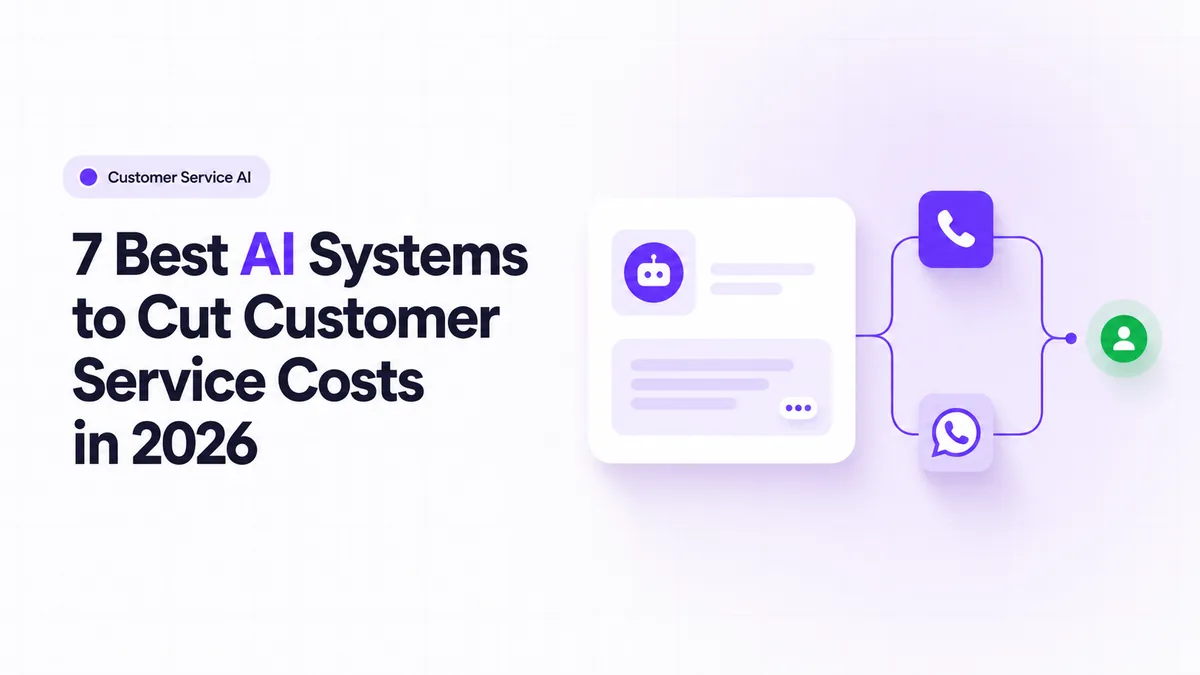
 Awais AhmadApr 11, 2026
The right AI system cuts service costs by completing routine work without hiding failed answers, repeat contacts, or expensive human escalations. The best AI systems for reducing customer service costs 2025 lists often focused on chatbot features; the stronger 2026 buying question is whether the system can resolve the issue across the channels customers actually use.
In 2025, Salesforce found that AI handled 30% of service cases and projected that share to reach 50% in 2027 (Salesforce, State of Service, Seventh Edition). That rising share creates real labor savings, but a fast automated reply is not the same as a completed resolution. We compare each system by pricing model, channel coverage, integration effort, handoff quality, reporting, and the work still left for agents.
CogWorkLabs has built voice and official WhatsApp workflows where the hard part was not generating an answer; it was reading live business data, recording what happened, and escalating with enough context for a person to continue.
<figure> <style> .c1 { --surface: #fcfcfb; --ink-1: #0b0b0b; --ink-2: #52514e; --muted: #898781; --grid: #e1e0d9; --accent: #2a78d6; --accent-2: #1baf7a; --negative: #c05a3e; } @media (prefers-color-scheme: dark) { .c1 { --surface: #1a1a19; --ink-1: #ffffff; --ink-2: #c3c2b7; --muted: #898781; --grid: #2c2c2a; --accent: #3987e5; --accent-2: #199e70; --negative: #d0674a; } } </style> <svg class='c1' viewBox='0 0 560 380' role='img' aria-label='Line chart showing AI handled 30 percent of customer service cases in 2025 and is expected to handle 50 percent in 2027.' font-family='system-ui, sans-serif'> <rect x='0' y='0' width='560' height='380' fill='var(--surface)'/> <text x='40' y='35' font-size='18' font-weight='700' fill='var(--ink-1)'>Share of Customer Service Cases Handled by AI</text> <text x='40' y='58' font-size='12' fill='var(--ink-2)'>Actual 2025 share and Salesforce's expected 2027 share</text> <line x1='70' y1='300' x2='520' y2='300' stroke='var(--grid)' stroke-width='1'/> <line x1='70' y1='258' x2='520' y2='258' stroke='var(--grid)' stroke-width='1'/> <line x1='70' y1='216' x2='520' y2='216' stroke='var(--grid)' stroke-width='1'/> <line x1='70' y1='174' x2='520' y2='174' stroke='var(--grid)' stroke-width='1'/> <line x1='70' y1='132' x2='520' y2='132' stroke='var(--grid)' stroke-width='1'/> <line x1='70' y1='90' x2='520' y2='90' stroke='var(--grid)' stroke-width='1'/> <text x='58' y='304' text-anchor='end' font-size='11' fill='var(--muted)'>0</text> <text x='58' y='262' text-anchor='end' font-size='11' fill='var(--muted)'>10</text> <text x='58' y='220' text-anchor='end' font-size='11' fill='var(--muted)'>20</text> <text x='58' y='178' text-anchor='end' font-size='11' fill='var(--muted)'>30</text> <text x='58' y='136' text-anchor='end' font-size='11' fill='var(--muted)'>40</text> <text x='58' y='94' text-anchor='end' font-size='11' fill='var(--muted)'>50</text> <polyline points='120,174 470,90' fill='none' stroke='var(--accent)' stroke-width='2.5' stroke-linecap='round' stroke-linejoin='round'/> <circle cx='120' cy='174' r='4' fill='var(--accent)'/> <circle cx='470' cy='90' r='4' fill='var(--accent-2)'/> <text x='120' y='156' text-anchor='middle' font-size='16' font-weight='700' fill='var(--ink-1)'>30%</text> <text x='470' y='77' text-anchor='middle' font-size='16' font-weight='700' fill='var(--ink-1)'>50%</text> <text x='120' y='326' text-anchor='middle' font-size='13' fill='var(--ink-2)'>2025 actual</text> <text x='470' y='326' text-anchor='middle' font-size='13' fill='var(--ink-2)'>2027 expected</text> <text x='40' y='362' font-size='11' fill='var(--muted)'>Takeaway: the expected AI-handled share rises by 20 percentage points.</text> </svg> <figcaption>Source: Salesforce State of Service, Seventh Edition, 2025.</figcaption> </figure>CogWorkLabs is the strongest fit when phone calls, official WhatsApp, live records, tracking, and tailored escalation must work around an existing service stack. Zendesk AI is the safer packaged choice for teams already inside Zendesk, Intercom Fin is the fastest outcome-priced layer to test, and Tidio Lyro is the lowest-cost starting point in this list. Choose custom integration when channel and workflow fit matter more than buying one helpdesk.
In 2025, Gartner forecast that agentic AI could autonomously resolve 80% of common service issues and reduce operational costs by 30% by 2029, but those figures are a forecast rather than a current market average (Gartner customer service forecast).
<iframe width="560" height="315" src="https://www.youtube-nocookie.com/embed/lvS-im-KgRU" title="I Tested Every AI Phone Caller Platform (2026)" frameborder="0" allow="accelerometer; autoplay; clipboard-write; encrypted-media; gyroscope; picture-in-picture; web-share" allowfullscreen></iframe>
Photo by BM Amaro on Pexels
CogWorkLabs is the best fit here when service work spans phone calls, official WhatsApp, live business records, workflow actions, tracking, and specialist escalation rather than a standard helpdesk. CogWorkLabs owns this offering, so its first-place position should be read as a use-case judgment, not an independent market award.
In 2026, Vapi Pricing listed a $0.05-per-minute hosting charge before speech recognition, language-model, text-to-speech, transport, and telephony costs. That detail matters because custom voice automation is a stack of metered services, not a flat bot fee.
A typical design keeps the current CRM or helpdesk, adds approved connections to business data, and lets the AI perform narrowly defined actions. The voice or WhatsApp layer receives the inquiry; the orchestration layer retrieves the customer, order, booking, or dealer record; a rules layer decides whether to answer, update, schedule, or escalate; and the audit layer records the source data, action, confidence, and handoff reason.
It saves most when agents repeatedly move the same facts between channels and systems. Appointment status, delivery tracking, order changes, lead qualification, missed-call follow-up, and dealer inquiries are good candidates because each has a known data source and a clear completion state.
In 2025, Meta moved the WhatsApp Business Platform to per-message pricing, with rates varying by destination market and message category (Meta WhatsApp pricing documentation). In 2026, Make Pricing listed its Core plan at $9 per month for 10,000 credits, while noting that advanced and AI modules can consume credits differently. In 2026, Airtable Pricing listed Team at $20 per user per month and Business at $45 per user per month on annual billing. Those costs are visible inputs to the operating model, not reasons to assume the full build will be cheap.
A packaged platform is better when the team wants standard ticketing, standard messaging, and vendor-managed administration. If the current helpdesk already owns the customer record, routing, knowledge base, and reporting, adding its native AI can reduce implementation risk. Custom work earns its place when calls, WhatsApp, live operational data, or unusual escalation rules sit outside that standard path.

Photo by Tima Miroshnichenko on Pexels
Zendesk AI is the practical choice for teams that already run customer service in Zendesk and want automation without rebuilding ticket routing, agent workspaces, and reporting. In 2026, Zendesk Pricing listed Suite Team from $55 per agent per month on annual billing, including AI agents, omnichannel routing, messaging, live chat, and telephony.
The savings case is strongest when the knowledge base is maintained, tickets use consistent fields, and escalation queues already reflect how the operation works. Native AI can classify intent, suggest or deliver answers, collect missing details, and pass unresolved cases into the same queue agents already monitor. That removes duplicate tooling and makes adoption easier to govern.
The important measurement distinction is reply automation versus resolved work. A reply should count as a resolution only when the customer’s goal was completed and the issue did not return as a repeat contact. For an order-status question, that means the bot retrieved the right order and delivered the current status. For a refund request, it may mean the system completed the permitted action or handed the case to the correct queue with the required evidence.
Zendesk becomes less attractive when voice AI availability, custom workflow depth, or external-system actions depend on higher plans, separate programs, or additional engineering. The platform can lower handling work inside its own operating model, but it should not be treated as a universal connector for every phone, WhatsApp, dealer, or legacy-system process.

Photo by Yan Krukau on Pexels
Intercom Fin is the best choice in this list for teams that want to test an AI support layer quickly and pay against vendor-defined outcomes rather than adding only agent seats. In 2026, Intercom Pricing listed Fin at $0.99 per outcome and showed an existing-helpdesk example with a minimum commitment of 50 outcomes per month and no Fin seat or setup fee.
That model makes the initial experiment easy to understand: connect approved content, define what Fin may answer or do, test representative questions, and inspect the cases it marks as outcomes. The speed advantage comes from using a prepared support product rather than designing every retrieval, conversation, and reporting component from the ground up.
The cost risk appears when volume grows or the outcome definition is broader than the finance team expects. At high usage, a per-outcome charge can overtake a seat-based or custom operating model, especially if customers reopen issues or agents still perform substantial follow-up. The correct denominator is not messages sent. It is completed customer issues that stayed completed.
Fin is most convincing for digital support with strong documentation and repeatable requests. Teams with call-heavy service, deep WhatsApp operations, or many custom back-office actions should verify those requirements before treating quick setup as complete channel fit. A fast deployment is valuable, but only when the AI can reach the data and actions required to finish the job.

Photo by Thirdman on Pexels
Freshworks Freddy AI is a sensible choice for growing teams that want helpdesk software, agent assistance, and customer-facing automation with the same vendor without starting with a large enterprise contract. In 2026, Freshdesk Pricing listed Growth from $19 per agent per month on annual billing, included the first 500 Freddy AI Agent sessions, and priced additional usage at $49 per 100 sessions.
That combination gives a team a visible base subscription and a visible usage step. It is easier to budget than a custom stack when email, chat, ticketing, routing, and standard knowledge answers make up most of the workload. The included sessions also create room for a controlled pilot before usage charges become the main cost driver.
Freddy’s value rises when agents need help summarizing conversations, finding approved answers, and applying consistent ticket fields. Customer-facing automation can take common questions, while workflow rules route exceptions to the right team. The operational benefit is not simply fewer tickets; it is fewer tickets that require a person to read the full history, locate the record, and decide the next queue.
The tradeoff is that a session is the vendor’s billing unit, not necessarily a completed resolution. Teams should map sessions to resolved issues, escalations, and repeat contacts before comparing Freddy directly with outcome-priced or conversation-priced systems. Freshworks is strongest when the service process fits a modern helpdesk. Complex phone automation, official WhatsApp workflows, or unusual business actions may still require additional connections and testing.

Photo by Yan Krukau on Pexels
Ada is best suited to larger self-service programs that have enough content, integration support, governance, and volume to justify a more involved automation rollout. In 2026, Ada reported more than 6.4 billion customer interactions and an 84% automated resolution rate on its ecommerce page; those are vendor-published aggregate figures, not an independent benchmark (Ada ecommerce and retail results).
The platform’s appeal is controlled automation across multiple customer journeys. Large organizations usually need more than a question-answer bot: they need identity-aware responses, approved actions, language coverage, reporting, security review, and a clear path to human agents. Ada fits that program style better than tools designed mainly for a quick small-business chat launch.
The work is in preparation. Content must be current, integrations must return reliable fields, action permissions must be narrow, and escalation policies must account for high-risk topics. A large self-service program also needs owners for testing, analytics, content changes, and incident review. Without those roles, a sophisticated platform can still serve stale answers at scale.
Ada’s published resolution figure shows what a mature program may claim, but buyers should ask what counted as automated resolution, which channels were included, and whether repeat contacts were excluded. Pricing is not public in the supplied research, so comparison should remain “custom quote” rather than an estimate. Ada is a strong fit where governance and scale are already real requirements; it is usually too involved for a small team that mainly needs inexpensive answers to repeat questions.
Photo by Anna Tarazevich on Pexels
Tidio Lyro is the best low-cost starting point here for small teams whose support volume is dominated by repeat chat questions. In 2026, Tidio Lyro advertised $0.50 per AI-handled conversation and offered 50 free conversations for testing.
That pricing is easy to evaluate against a narrow use case. A small team can load approved information, test the questions customers ask most often, observe where Lyro answers correctly, and send the remaining conversations to a person. Because the charge is conversation-based rather than seat-based, the model can fit a business that has few agents but a steady flow of simple requests.
The main limitation is channel and action depth. Lyro’s budget position is strongest for chat-led service, not as evidence that it can replace a call workflow, a deep official WhatsApp operation, or a custom sequence that updates several business systems. When the customer needs an account change, live stock check, booking change, or regulated answer, the value depends on whether the required data and action are available safely.
Human handoff should preserve the transcript, customer details, detected intent, and the reason the AI stopped. Without that packet, the customer repeats the story and the apparent automation saving turns into extra handling time. Lyro is therefore a good entry product when the question set is narrow and the handoff path is simple.
Photo by Daniil Komov on Pexels
Botpress is the strongest option in this list for technical teams that want to design a complex support agent and accept responsibility for its flows, integrations, testing, and maintenance. In 2026, Botpress Pricing listed a free pay-as-you-go tier with 500 incoming messages, Plus at $89 per month with 5,000, and Team at $495 per month with 50,000.
Unlike a packaged helpdesk assistant, an agent builder gives the team more control over conversation state, tool calls, data retrieval, workflow branching, and channel adapters. That flexibility is useful when the system must check several sources, ask structured follow-up questions, write to a business system, and escalate under custom rules.
The tradeoff is ownership. Someone must define the data contract for every tool, protect credentials, test failure paths, watch message usage, review logs, and update the agent when an upstream field or policy changes. WhatsApp and voice can be part of a broader architecture, but channel availability alone does not remove the engineering work around consent, telephony, message templates, identity, and handoff.
Botpress saves money when its flexibility removes repeated custom agent work across many workflows. It can cost more than expected when each use case becomes a separate mini-project with weak shared standards. Teams should build a common action layer, logging format, escalation object, and test set before adding more channels. That turns flexibility into an operating system rather than a collection of disconnected demos.
Photo by RDNE Stock project on Pexels
The best system is the one whose billing unit, channels, data access, and escalation path match the work you need completed. In 2026, Ada reported an 84% automated resolution rate, but that vendor-reported metric cannot be compared directly with Salesforce’s expected AI case share or Gartner’s forecast for common issues because scope, year, and evidence type differ (Ada published result).
| System | 2026 published starting price | Pricing model | Voice | Official WhatsApp | Existing-system fit | Human handoff | Setup effort | Best use case | Likely source of savings |
|---|---|---|---|---|---|---|---|---|---|
| CogWorkLabs AI Integration | Custom quote | Build plus provider usage | Core fit | Core fit | Built around current tools | Custom rules and tracking | High | Voice, WhatsApp, live data, specialist workflows | Removes cross-system handling without replacing the stack |
| Zendesk AI | $55 per agent/month yearly | Seats plus applicable AI usage | Included telephony; AI voice varies | Messaging support; verify exact path | Best inside Zendesk | Native queues | Medium | Existing Zendesk operations | Reduces work inside one helpdesk |
| Intercom Fin | $0.99 per outcome | Outcome-based | Verify separately | Verify exact deployment | Connects to supported helpdesks | Support-team escalation | Low to medium | Fast digital-support launch | Pays against vendor-defined outcomes |
| Freshworks Freddy AI | $19 per agent/month yearly | Seats plus sessions | Platform-dependent | Verify exact plan and connection | Best inside Freshdesk | Workflow routing | Medium | Growing support teams | Combines helpdesk and AI usage |
| Ada | Custom quote | Contract pricing | Confirm in scope | Confirm in scope | Deep integration program | Enterprise escalation design | High | Large self-service programs | High-volume automation with governance |
| Tidio Lyro | $0.50 per conversation | Conversation-based | Not its main strength | Confirm required depth | Best for lighter setups | Chat handoff | Low | Small teams with repeat questions | Low entry cost for common chat requests |
| Botpress | Free; paid from $89/month | Tier plus message usage | Through broader architecture | Through channel integration | Flexible custom connections | Custom pattern | High | Technical teams building agents | Reuses a shared agent framework across workflows |
The wider market splits into packaged helpdesks, AI layers attached to helpdesks, and configurable agent builders. This list adds another path: custom integration around the systems a business already depends on. That path is not automatically better. It earns the extra setup only when standard products cannot cover the required phone, WhatsApp, data, action, and escalation flow.
<figure> <style> .c2 { --surface: #fcfcfb; --ink-1: #0b0b0b; --ink-2: #52514e; --muted: #898781; --grid: #e1e0d9; --accent: #2a78d6; --accent-2: #1baf7a; --negative: #c05a3e; } @media (prefers-color-scheme: dark) { .c2 { --surface: #1a1a19; --ink-1: #ffffff; --ink-2: #c3c2b7; --muted: #898781; --grid: #2c2c2a; --accent: #3987e5; --accent-2: #199e70; --negative: #d0674a; } } </style> <svg class='c2' viewBox='0 0 560 380' role='img' aria-label='Vertical bar chart showing the Salesforce expected 2027 AI case share at 50 percent, the Gartner 2029 forecast for common issues at 80 percent, and the Ada vendor-reported automated resolution rate at 84 percent.' font-family='system-ui, sans-serif'> <rect x='0' y='0' width='560' height='380' fill='var(--surface)'/> <text x='40' y='35' font-size='18' font-weight='700' fill='var(--ink-1)'>Published AI Resolution Reference Points</text> <text x='40' y='58' font-size='12' fill='var(--ink-2)'>Different definitions and years; use as references, not equivalents</text> <line x1='70' y1='300' x2='520' y2='300' stroke='var(--grid)' stroke-width='1'/> <line x1='70' y1='258' x2='520' y2='258' stroke='var(--grid)' stroke-width='1'/> <line x1='70' y1='216' x2='520' y2='216' stroke='var(--grid)' stroke-width='1'/> <line x1='70' y1='174' x2='520' y2='174' stroke='var(--grid)' stroke-width='1'/> <line x1='70' y1='132' x2='520' y2='132' stroke='var(--grid)' stroke-width='1'/> <line x1='70' y1='90' x2='520' y2='90' stroke='var(--grid)' stroke-width='1'/> <text x='58' y='304' text-anchor='end' font-size='11' fill='var(--muted)'>0</text> <text x='58' y='262' text-anchor='end' font-size='11' fill='var(--muted)'>20</text> <text x='58' y='220' text-anchor='end' font-size='11' fill='var(--muted)'>40</text> <text x='58' y='178' text-anchor='end' font-size='11' fill='var(--muted)'>60</text> <text x='58' y='136' text-anchor='end' font-size='11' fill='var(--muted)'>80</text> <text x='58' y='94' text-anchor='end' font-size='11' fill='var(--muted)'>100</text> <rect x='95' y='195' width='90' height='105' rx='4' fill='var(--accent)'/> <rect x='235' y='132' width='90' height='168' rx='4' fill='var(--accent-2)'/> <rect x='375' y='124' width='90' height='176' rx='4' fill='var(--accent-2)' fill-opacity='0.78'/> <text x='140' y='183' text-anchor='middle' font-size='16' font-weight='700' fill='var(--ink-1)'>50%</text> <text x='280' y='120' text-anchor='middle' font-size='16' font-weight='700' fill='var(--ink-1)'>80%</text> <text x='420' y='112' text-anchor='middle' font-size='16' font-weight='700' fill='var(--ink-1)'>84%</text> <text x='140' y='322' text-anchor='middle' font-size='13' fill='var(--ink-2)'>Salesforce 2027</text> <text x='140' y='339' text-anchor='middle' font-size='11' fill='var(--muted)'>AI case share</text> <text x='280' y='322' text-anchor='middle' font-size='13' fill='var(--ink-2)'>Gartner 2029</text> <text x='280' y='339' text-anchor='middle' font-size='11' fill='var(--muted)'>Common issues</text> <text x='420' y='322' text-anchor='middle' font-size='13' fill='var(--ink-2)'>Ada reported</text> <text x='420' y='339' text-anchor='middle' font-size='11' fill='var(--muted)'>Auto resolution</text> <text x='40' y='366' font-size='11' fill='var(--muted)'>Takeaway: scope, date, and evidence type must stay visible in comparisons.</text> </svg> <figcaption>Source: Salesforce State of Service, 2025; Gartner, 2025; Ada, accessed 2026.</figcaption> </figure>We selected these systems by scoring completed work, operating cost, channel fit, integration depth, and service controls rather than ranking feature counts. In 2025, Gartner forecast an 80% autonomous-resolution ceiling for common issues by 2029, which is exactly why forecasts must be separated from current customer results and independently measured outcomes (Gartner forecast methodology context).
Measurable savings came first. We looked for a published starting price or a clear custom-pricing label, then identified the billing unit: agent, outcome, session, conversation, message, or provider usage. Those units are not interchangeable.
Completed resolution mattered more than response speed. A system received more credit when the operating model could show that the customer’s goal was completed, the case stayed closed, and the AI did not create avoidable repeat contact.
AI integration with existing customer service systems using voice, WhatsApp, tracking, and human escalation.
Channel fit covered the whole journey. Voice, official WhatsApp, web chat, email, and helpdesk messaging were judged by whether the system could use the channel in the required business process, not merely display a channel logo.
Control quality included handoff, logs, and data freshness. We considered whether the system could explain why it escalated, preserve the conversation, show which source supported the answer, and expose unanswered-message patterns.
Setup effort and maintenance counted against savings. A flexible builder or custom stack may deliver a better fit, but its testing, credential management, monitoring, and change control remain operating costs.
Vendor-published figures are labeled as vendor-reported, forecasts are labeled as forecasts, and public prices are tied to their published billing units. CogWorkLabs is our own offering, so we ranked it first only for the use case it was designed to cover: custom voice, official WhatsApp, live business data, tracking, and tailored escalation around existing systems. A packaged platform is the fairer recommendation when its native workflow already fits.
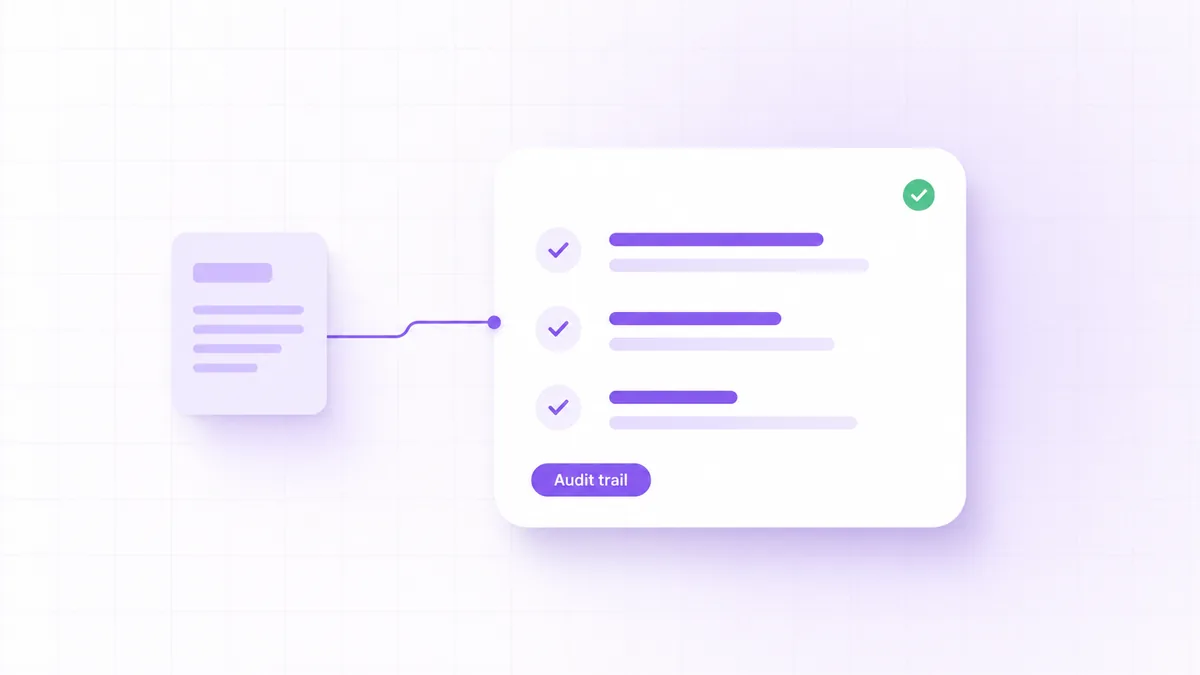

Photo by Kampus Production on Pexels
Choose the system by tracing a real customer issue from first contact to verified completion, including every data lookup, action, fee, and human handoff. In 2025, Meta changed WhatsApp Business Platform billing to per-message pricing that varies by market and category, so channel economics and operating geography belong in the buying decision (Meta pricing documentation).
Choose a packaged platform when the current helpdesk, channels, and routing already match the service process. Native AI reduces the number of systems to administer and usually gives agents a shared queue, customer history, and reporting surface.
Choose a custom integration when the service process crosses systems the packaged product cannot control. That may include phone calls, official WhatsApp, dealer records, booking engines, inventory, field-service tools, or specialized approval rules. An application programming interface, or API, is the approved connection that lets systems exchange data and request actions.
Check whether the channel can complete the task, not merely receive a message. A voice system must handle telephony, speech services, interruption, call transfer, and consent rules. An official WhatsApp flow must use approved business messaging, preserve customer identity, account for message categories, and work with the templates or service windows relevant to the use case.
Ask the vendor to demonstrate the exact path: receive the inquiry, authenticate or identify the customer, read the live record, perform the allowed action, write the result back, and expose the audit entry. A demo built on static sample text does not prove live-system support.
Test handoff as a data transfer, not a button. The agent should receive the transcript, customer record, detected intent, attempted actions, source references, confidence or stop reason, and the next recommended step. The customer should not have to repeat information the system already collected.
Also inspect the unanswered-message queue. It should distinguish missing knowledge, unavailable data, failed tool calls, policy restrictions, and ambiguous customer intent. Those categories tell you whether to update content, repair an integration, narrow an action, or train agents for a recurring exception.
Require the system to show where an answer came from and when that source changed. Live business data should be fetched from the system of record when freshness matters; cached content should expose its update process. Logs should record the input, retrieved evidence, action request, result, escalation, and final status without storing more sensitive data than the operation needs.
Set explicit answer limits for refunds, regulated advice, account security, and other high-risk work. The cheapest automation is not the one that answers most often. It is the one that finishes safe work reliably and stops cleanly when a person should decide.

Photo by Kindel Media on Pexels
The best AI systems for reducing customer service costs at scale are measured by cost per completed issue after setup, usage, failures, repeat contacts, and remaining human work are included. In 2026, Make listed $9 per month for 10,000 Core-plan credits and explained that a standard module action normally consumes one credit, while advanced and AI modules may consume credits differently (Make pricing and credit model).
Start with the cost of issues that stay resolved. Add agent labor, management, helpdesk seats, telephony, messaging, quality review, and outsourced support, then divide by completed issues after removing reopened or repeated contacts. Use the same issue definition before and after automation.
Response volume is useful operationally, but it is a weak savings denominator. A system can produce many replies while pushing confused customers into repeat conversations. Track first-contact resolution, escalation rate, repeat-contact rate, and unresolved backlog beside cost.
Add fixed and variable costs before claiming savings. Fixed costs include implementation, content preparation, integration work, testing, security review, and ongoing ownership. Variable costs include model usage, voice minutes, telephony, WhatsApp messages, workflow actions, storage, and vendor-defined outcomes, sessions, conversations, or messages.
In 2026, Intercom priced Fin at $0.99 per outcome, so 100 billed outcomes correspond to $99 before other platform costs. In 2026, Tidio priced Lyro at $0.50 per conversation, so 100 billed conversations correspond to $50. In 2026, Freshdesk priced additional Freddy usage at $49 per 100 sessions. These are useful public reference points, but the billed units describe different events and cannot be treated as equivalent resolutions.
For a voice workflow, Vapi’s 2026 published hosting component was $0.05 per minute, so 100 hosted call minutes correspond to $5 before speech, model, transport, and telephony charges. For WhatsApp, use Meta’s destination- and category-specific per-message rate rather than inventing one global figure. Add the workflow and record layer as separate lines; for example, Make’s published Core price and Airtable’s published Team price may be part of the stack, but actual capacity depends on usage and architecture.
<figure> <style> .c3 { --surface: #fcfcfb; --ink-1: #0b0b0b; --ink-2: #52514e; --muted: #898781; --grid: #e1e0d9; --accent: #2a78d6; --accent-2: #1baf7a; --negative: #c05a3e; } @media (prefers-color-scheme: dark) { .c3 { --surface: #1a1a19; --ink-1: #ffffff; --ink-2: #c3c2b7; --muted: #898781; --grid: #2c2c2a; --accent: #3987e5; --accent-2: #199e70; --negative: #d0674a; } } </style> <svg class='c3' viewBox='0 0 560 380' role='img' aria-label='Horizontal bar chart ranking public AI usage prices per 100 vendor-defined units: Intercom Fin outcomes cost 99 dollars, Tidio Lyro conversations cost 50 dollars, and Freshdesk Freddy sessions cost 49 dollars.' font-family='system-ui, sans-serif'> <rect x='0' y='0' width='560' height='380' fill='var(--surface)'/> <text x='40' y='35' font-size='18' font-weight='700' fill='var(--ink-1)'>Public AI Usage Price per 100 Billed Units</text> <text x='40' y='58' font-size='12' fill='var(--ink-2)'>Ranked by price; each vendor defines its billed unit differently</text> <line x1='170' y1='105' x2='170' y2='285' stroke='var(--grid)' stroke-width='1'/> <line x1='248' y1='105' x2='248' y2='285' stroke='var(--grid)' stroke-width='1'/> <line x1='325' y1='105' x2='325' y2='285' stroke='var(--grid)' stroke-width='1'/> <line x1='403' y1='105' x2='403' y2='285' stroke='var(--grid)' stroke-width='1'/> <line x1='480' y1='105' x2='480' y2='285' stroke='var(--grid)' stroke-width='1'/> <text x='170' y='96' text-anchor='middle' font-size='11' fill='var(--muted)'>$0</text> <text x='248' y='96' text-anchor='middle' font-size='11' fill='var(--muted)'>$25</text> <text x='325' y='96' text-anchor='middle' font-size='11' fill='var(--muted)'>$50</text> <text x='403' y='96' text-anchor='middle' font-size='11' fill='var(--muted)'>$75</text> <text x='480' y='96' text-anchor='middle' font-size='11' fill='var(--muted)'>$100</text> <text x='160' y='141' text-anchor='end' font-size='13' fill='var(--ink-2)'>Intercom Fin</text> <rect x='170' y='128' width='307' height='20' rx='4' fill='var(--negative)'/> <text x='485' y='143' font-size='16' font-weight='700' fill='var(--ink-1)'>$99</text> <text x='160' y='201' text-anchor='end' font-size='13' fill='var(--ink-2)'>Tidio Lyro</text> <rect x='170' y='188' width='155' height='20' rx='4' fill='var(--negative)'/> <text x='333' y='203' font-size='16' font-weight='700' fill='var(--ink-1)'>$50</text> <text x='160' y='261' text-anchor='end' font-size='13' fill='var(--ink-2)'>Freshdesk Freddy</text> <rect x='170' y='248' width='152' height='20' rx='4' fill='var(--negative)'/> <text x='330' y='263' font-size='16' font-weight='700' fill='var(--ink-1)'>$49</text> <text x='40' y='350' font-size='11' fill='var(--muted)'>Takeaway: compare billing definitions and workload fit before price alone.</text> </svg> <figcaption>Source: Intercom Pricing, Freshdesk Pricing, and Tidio Lyro AI Agent, accessed 2026.</figcaption> </figure>Subtract the cost of failed automation from the claimed benefit. Include agent time spent correcting wrong answers, repeat contacts caused by incomplete replies, refunds or service recovery, unhandled messages, monitoring, maintenance, and the human work that remains after escalation.
Use a comparison sheet with the same columns for the current operation and the proposed system: completed issues, total operating cost, cost per completed issue, escalation rate, repeat-contact rate, backlog, and customer-impact incidents. Run the model with conservative assumptions and keep vendor billing units separate until you can map them to your own resolved-issue definition.
A system is financially credible when the cost per completed issue falls while repeat contacts and service failures remain controlled. If the mapping step is where the team keeps losing time, the fastest first action is to document a high-volume inquiry from channel entry through final resolution, including every system read, write, fee, and handoff.
The right buying checklist covers channel fit, live data, safe actions, handoff quality, evidence, and total cost rather than the chatbot interface alone.
Choose an AI-powered customer service system by testing a real customer journey from first message or call to completed resolution. Compare the system’s pricing unit, supported channels, access to current business data, permitted actions, logs, answer limits, and human handoff packet. Use a packaged platform when its native helpdesk and channels already fit; use a configurable builder or custom integration when the workflow crosses phone, official WhatsApp, live records, and specialized escalation.
The right choice depends on operational fit: use a packaged system when its helpdesk, channels, billing model, and escalation path already match the work, and use custom integration when service depends on voice, official WhatsApp, live business data, tracking, and tailored handoffs. Zendesk is the practical packaged option for existing Zendesk teams, Intercom Fin is fast to test, Tidio Lyro is the budget entry point, and CogWorkLabs fits the cross-system use case. The related best AI systems for reducing customer service costs at scale page shows how that architecture can connect to an existing service operation without replacing the tools that already work.
