Best AI Agent Tools for Lead Qualification
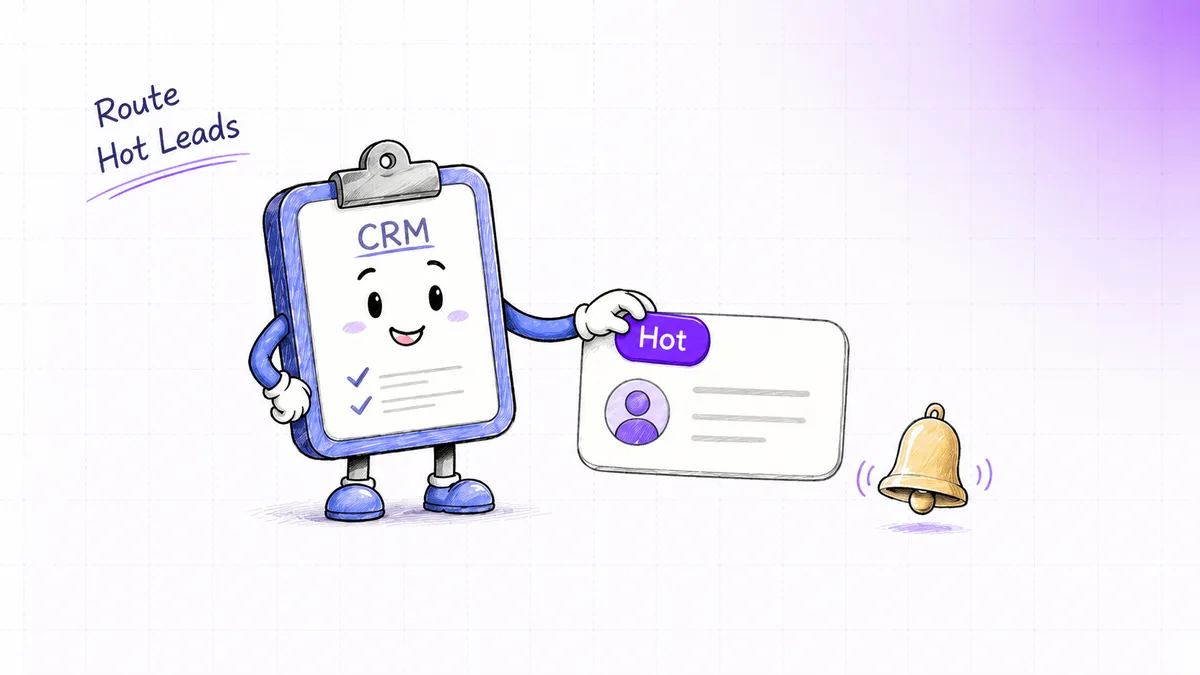
Missed speed-to-lead is where otherwise good pipeline quietly dies, especially when a form fill, chat message, or missed call waits for a human to decide whether it is worth chasing. The best ai agent tools for lead generation and qualification should not just chat with prospects, they should ask the right qualifying questions, score intent, write the result back to the CRM, route the lead, and alert sales when the lead is hot. In 2025, Gartner predicted that by 2028 AI agents will outnumber human sellers by 10x, while fewer than 40% of sellers will say agents improved productivity without better process design (Gartner, AI Agents Sales Prediction). I selected these tools by weighting CRM action quality, routing control, channel coverage, pricing clarity, and how well each handles messy real conversations.
Key Takeaways
The best default pick is Claude plus GoHighLevel when you need a practical qualification agent that can tag, score, and notify inside GHL. HubSpot Breeze is the runner-up for teams already living in HubSpot. Choose Salesforce Agentforce or Qualified when Salesforce is the revenue system and governance matters more than setup speed.
1. Claude + GoHighLevel - Best for AI Lead Generation and Qualification
Claude plus GoHighLevel is the best fit when the agent must qualify leads, assign Hot/Warm/Cold tags, and trigger GHL routing without adding another CRM. In 2026, HighLevel lists AI Employee Unlimited at $97 per enabled location and includes unlimited Conversation AI under fair-use limits (HighLevel, AI Product Pricing). The practical pattern is simple: Claude handles the reasoning layer, while GoHighLevel owns contacts, pipelines, tags, calendars, SMS, calls, and notifications.
I like this stack for contractors, local services, agencies, and appointment-led businesses because the qualification logic can be explicit: budget, service area, urgency, property type, decision-maker status, and preferred booking window. Claude tool use matters here because Claude can return structured arguments that your middleware or GHL workflow turns into a tag, score, note, or sales alert. Best for: GHL-heavy teams and the best AI lead qualification tools for contractors. Pricing: GHL AI from pay-per-use to $97 per location, plus Claude API usage. Standout feature: qualification logic you can tune without rebuilding the whole CRM.
2. HubSpot Breeze - Best for HubSpot-Native Qualification
HubSpot Breeze is the best choice when contacts, lifecycle stages, forms, meetings, and sales activity already live in HubSpot. In 2026, HubSpot prices Breeze Customer Agent at $0.50 per resolved conversation and Prospecting Agent at $1.00 per recommended lead (HubSpot, Breeze AI Tools). Breeze is less of a blank canvas than Claude plus GHL, but that is the point: it already knows the HubSpot data model, so lead scoring and handoff can happen closer to the CRM record.
The useful pieces are Customer Agent, Prospecting Agent, Lead Scoring, and Customer Handoff Agent. For inbound qualification, I would use Breeze when the sales team already trusts HubSpot properties and workflows, not when the company wants custom scoring outside HubSpot. The hands-on caveat is credit consumption: outcome-based pricing is clean, but it can hide volume risk if every low-intent visitor is allowed to burn agent actions. Best for: SMB and mid-market teams using HubSpot as the source of truth. Pricing: outcome-based Breeze charges plus HubSpot plan costs. Standout feature: CRM-native lead scoring and handoff.
3. Salesforce Agentforce - Best for Enterprise CRM Governance
Salesforce Agentforce is the right pick when lead qualification must respect Salesforce data permissions, objects, flows, and enterprise approval rules. In 2026, Salesforce lists Agentforce Conversations at $2 per conversation and Flex Credits at $500 per 100,000 credits (Salesforce, Agentforce Pricing). The product is strongest when the agent is not just answering questions, but taking controlled actions against Sales Cloud, Data Cloud, or custom objects.
I would shortlist Agentforce for teams with strict field-level security, regional sales territories, partner channels, or multiple routing queues. The build is heavier than GHL or HubSpot because the hard work is data readiness: duplicate leads, missing account hierarchies, and unclear ownership rules will make any agent look worse than it is. Agentforce’s value is the governance layer, not speed of first prototype. Best for: enterprise Salesforce teams with compliance, permissions, and complex routing. Pricing: conversation pricing, Flex Credits, or user licensing depending on deployment. Standout feature: controlled agent actions inside Salesforce.
4. Qualified Piper - Best for Salesforce Website Conversion
Qualified Piper is best when the highest-value qualification moment happens on the website and Salesforce is the system of record. In 2026, Qualified says Piper is used by more than 500 companies and works 24x7 across inbound buyer engagement (Qualified, Piper AI SDR Agent). Piper is built for a narrower problem than general agent builders: recognize high-intent visitors, use Salesforce context, qualify them, and book or route them before the buyer leaves.
The strongest use case is account-based inbound. If a known target account returns to a pricing page, Piper can treat that differently from an anonymous visitor reading a blog post. That distinction matters because lead qualification is not only about asking questions, it is about deciding whether to interrupt sales now. The tradeoff is cost and fit: Qualified is not usually the first tool I would pick for small local businesses or low-ticket lead flow. Best for: B2B teams with Salesforce, meaningful site traffic, and high ACV deals. Pricing: custom. Standout feature: Salesforce-aware website engagement and meeting booking.
5. Intercom Fin - Best for Multi-Channel Reception and Support-Led Qualification
Intercom Fin is best when lead qualification starts as a support or reception conversation across chat, email, WhatsApp, SMS, or phone. In 2026, Intercom lists Fin AI Agent at $0.99 per outcome, with WhatsApp, SMS, email campaigns, and phone billed separately by usage (Intercom, Pricing). Fin is not a pure sales qualification product, but it is strong when buyers arrive through service-style channels and need triage before a rep gets involved.
For best ai tools for lead qualification in virtual reception, the evaluation should focus on fallback quality: when does the agent stop, collect contact details, and hand the conversation to a person? Fin’s outcome model is attractive when it resolves routine questions before qualification, but you still need clean routing rules for sales intent. I would use it for companies where support, reception, and sales inquiries share the same front door. Best for: multi-channel support teams that also capture sales demand. Pricing: seat plan plus $0.99 per Fin outcome and channel usage. Standout feature: support-grade conversation handling across channels.
6. Salesloft Chat Agents - Best for Revenue Teams Already Using Salesloft
Salesloft Chat Agents are best for B2B teams that want web chat qualification tied to an existing revenue engagement motion. In 2026, Salesloft describes its chat agents as able to ask preset questions, capture key data, and route high-intent visitors to sales reps (Salesloft, AI Chat Agent for B2B Sales). This is useful when the sales team already works from Salesloft cadences, signals, and handoff processes.
The important detail is that Salesloft’s strength is orchestration around sellers, not deep custom agent engineering. You get faster deployment for common qualification paths, but less freedom than a Claude, n8n, or custom API stack. I would choose it when the team wants marketing-site conversations to feed a seller workflow cleanly, not when the qualification model needs unusual industry logic. Best for: Salesloft customers with inbound website traffic and SDR coverage. Pricing: generally sales-led. Standout feature: chat qualification connected to revenue engagement workflows.
7. Clay - Best for Data-Enriched Lead Scoring
Clay is best when qualification depends on external data enrichment before a human or agent decides what to do next. In 2026, Clay says Data Credits start at $0.05 each, Actions start under $0.01 each, and 150+ enrichment partners feed its data marketplace (Clay, Pricing). Clay is not the front-end receptionist, but it can be the scoring engine behind outbound and inbound qualification.
The pattern I have seen work is to enrich a new lead with company size, industry, technology stack, hiring signals, funding, location, and role, then send a normalized score to HubSpot, Salesforce, or GHL. Clay’s AI columns and formulas are useful for classifying leads, but you need guardrails around enrichment cost. A bad workflow can spend money on low-fit leads before you filter them. Best for: GTM teams that need firmographic and technographic scoring. Pricing: credit and action based. Standout feature: enrichment-first qualification before routing or outreach.
8. n8n - Best for Custom AI Agent Workflows
n8n is best when the qualification workflow needs custom branching, API calls, human approval gates, and self-hosting options. In 2026, n8n lists Starter at €20 per month annually with 2,500 workflow executions and Pro at €50 per month annually with 10,000 executions (n8n, Pricing). The n8n AI Agent node can call tools and APIs, which makes it a good control layer between a model and a CRM.
This is the option I would pick when a simple chatbot cannot express the real process: enrich lead, check territory, look up calendar capacity, score intent, pause for approval above a deal threshold, then notify Slack and update the CRM. The tradeoff is maintenance. Someone has to own node failures, API schema changes, credential rotation, and retry logic. Best for: technical ops teams and agencies building tailored qualification pipelines. Pricing: cloud plans, self-hosted options, and execution-based limits. Standout feature: visual workflow control with agent nodes and API tools.
9. Zapier Agents - Best for Lightweight AI Agent Tools for Lead Generation and Qualification
Zapier Agents are best when a small team wants a practical agent connected to many business apps without engineering a custom backend. In 2026, Zapier says its platform connects more than 9,000 apps and its free plan includes 100 tasks per month (Zapier, Pricing). For lead qualification, that means a form, spreadsheet, inbox, CRM, Slack channel, and calendar can be connected quickly.
I would use Zapier for first-pass qualification where the logic is clear and the risk is low: score a form response, summarize the conversation, add a CRM note, send a notification, or create a follow-up task. It is less suitable when you need deep state management, complex exception handling, or highly regulated data flows. The task model is also important because each successful action can count toward usage. Best for: lean teams validating an AI lead process before moving to custom infrastructure. Pricing: free plan plus task-tier pricing. Standout feature: broad app coverage and fast agent setup.
Comparison Summary Table
Use this table to shortlist tools by system of record, channel fit, and pricing model before you compare demos. In 2026, Zapier reports 9,000+ app connections, which is why app coverage belongs beside pricing and lead-routing depth in any buying decision (Zapier, Pricing).
| Tool | Best For | Pricing | Standout Feature |
|---|
| Claude + GoHighLevel | GHL lead scoring and routing | GHL AI from pay-per-use to $97/location, plus Claude usage | Custom Hot/Warm/Cold tagging |
| HubSpot Breeze | HubSpot-native qualification | $1 per recommended lead, $0.50 per resolved conversation | CRM-native handoff |
| Salesforce Agentforce | Enterprise Salesforce governance | $2/conversation or Flex Credits from $500/100K | Permission-aware CRM actions |
| Qualified Piper | Salesforce website conversion | Custom | Salesforce-aware AI SDR |
| Intercom Fin | Virtual reception and support-led qualification | $0.99 per outcome plus channel usage | Multi-channel triage |
| Salesloft Chat Agents | Revenue engagement teams | Sales-led | Preset questions and sales routing |
| Clay | Enrichment-led scoring | Data Credits from $0.05, Actions under $0.01 | 150+ enrichment partners |
| n8n | Custom agent workflows | From €20/month annually | AI Agent node with tool calls |
| Zapier Agents | Lightweight app-connected agents | Free plan with 100 tasks/month | 9,000+ app ecosystem |
How We Selected These
I selected these tools by testing whether they can turn a real inquiry into a qualified CRM action, not whether they can produce a polished chat response. In 2026, an academic study of more than 6,000 public n8n workflows found that LLM workflows often combine control logic, external tools, communication services, storage, and human review points, which matches how production qualification systems actually behave (Tang and Zhou, Characterizing LLM Agentic Workflows).
Criteria used:
- CRM action quality: Can the tool update lead fields, tags, lifecycle stages, or ownership?
- Routing control: Can it notify the right rep based on score, territory, or urgency?
- Channel coverage: Can it handle chat, forms, email, SMS, calls, or WhatsApp where relevant?
- Cost visibility: Can a team estimate spend before volume rises?
- Failure handling: Can it fall back to a human when confidence is low?
Bias disclosure: I favor tools that expose workflow logic over tools that hide qualification inside a black box.
How to Choose the Right AI Agent Tools for Lead Generation and Qualification
Choose the tool that owns your lead handoff, because qualification only matters when the next action happens reliably. In 2025, McKinsey found that 87% of executives expected gen AI to drive revenue growth within three years, but the same report tied gains to organizational change rather than tool adoption alone (McKinsey, AI in the Workplace).
- Pick GHL plus Claude for local services and contractors: The best AI lead qualification tools for contractors should score urgency, job type, location, budget, and availability, then tag and alert inside the same system used for SMS and calls.
- Pick HubSpot or Salesforce when CRM hygiene is already strong: These tools reward clean properties, clear ownership rules, and well-defined lifecycle stages.
- Pick Intercom, Fin, or Salesloft for channel-first teams: The best AI-powered lead qualification tools multi-channel support 2025 2026 searches usually point to teams where chat, email, SMS, and support inquiries overlap.
- Pick n8n, Zapier, or Clay when the process is still changing: These tools let you test scoring logic, enrichment, and alerts before committing to a heavier sales platform.
Conclusion
Claude plus GoHighLevel is the strongest pick for practical lead qualification when the target workflow is Claude scoring, GHL tags, Hot lead alerts, and sales routing. In 2025, Gartner warned that more agents alone will not guarantee seller productivity, which is the right decision rule here: buy the tool that improves the handoff, not the one with the flashiest demo. For a production-ready version of this workflow, CogworkLabs' ai lead qualification tool is the practical place to start.
 Zegham Ali
 Zeeshan AhmadJul 9, 2026
 Awais Ahmad