
Workflow Automation
9 Best AI Email Marketing Automation Tools for 2026
Compare the best AI email marketing automation tools 2025 2026 for content, personalization, send-time optimization, CRM workflows, and reply handling.
 Awais AhmadJul 15, 2026
 Awais ShahidJul 15, 2026
The top 5 AI testing tools for automated regression testing differ less in their AI claims than in who owns the tests, how reliably they run, and what happens when a release fails. In 2025, Capgemini, Sogeti, and OpenText found that 43% of organizations were experimenting with generative AI in QA, while just 15% had scaled it across the enterprise (World Quality Report 2025-26).
AI-assisted regression testing means software helps create, repair, prioritize, or diagnose tests while a repeatable runner still checks whether existing behavior changed. For web applications, that runner may be Playwright; the surrounding operating system usually includes test-case control in TestRail, CI triggers, trace files, videos, and a release rule that decides whether deployment can continue.
The hard part is rarely producing the first script. It is keeping selectors stable, test data isolated, failures reproducible, and evidence clear enough that a developer can distinguish a product defect from a broken test. The comparison below therefore weighs deterministic execution, code ownership, portability, CI/CD fit, traceability, maintenance responsibility, deployment options, and total operating effort—not just how quickly a demo can generate a test.
The best choice follows the team’s ownership and maintenance model.

Photo by Daniil Komov on Pexels
CogWorkLabs’ Web Regression Testing Tool is the best fit here when an organization wants a Playwright-based release system rather than a separate AI test-authoring workspace. CogWorkLabs built and owns the product, so this recommendation carries an ownership interest; the comparison still applies the same criteria used for every other option.
In 2025, the World Quality Report showed a wide gap between AI experimentation in QA at 43% and enterprise-wide scaling at 15%, which is why an operational path matters more than a polished generation demo (Capgemini, Sogeti, and OpenText, World Quality Report 2025-26). The tool’s practical value is the path from requirement to release evidence: organize cases in TestRail, map them to Playwright tests, run them from CI, collect traces, and publish results back to the test-management layer.
That architecture keeps the browser checks deterministic. AI can assist with mapping, drafting, and diagnosis, but the committed test remains reviewable and repeatable. Playwright Trace Viewer captures the action sequence, DOM snapshots, network activity, and console evidence needed to inspect a failed run without immediately rerunning it. When the same test case also carries a TestRail identifier, a release manager can trace a failed requirement to the exact CI artifact instead of reconciling two disconnected reports.
The single internal product reference is the clearest way to inspect that workflow: tools for automating regression testing with Playwright CI runs, TestRail synchronization, and trace reporting. The important point is not the label on the tool; it is that the handoff between requirements, executable checks, CI evidence, and test-management status is designed as one operating loop.
This option fits QA and engineering teams that already treat tests as code, need browser behavior checked in a repeatable environment, and want release evidence attached to known cases. It is especially useful when developers need direct access to selectors, fixtures, assertions, and failure artifacts rather than a visual abstraction that hides the executable layer.
It also fits regulated or process-heavy delivery teams where a passing dashboard is not enough. The useful output is an audit trail: which case ran, against which build, with what data, in which environment, and with which trace attached.
Verify the supported deployment model, secret handling, private-network access, browser matrix, expected TestRail field mapping, and who maintains test data. Also confirm whether your application needs mobile-native testing, desktop automation, or non-browser protocols, because a Playwright-led web tool should not be stretched into areas it was not built to cover.
No public benchmark is supplied for authoring speed or maintenance reduction, so evaluate it with a representative slice of your own suite. A useful pilot includes a stable happy path, a permission-sensitive flow, a data-heavy workflow, and a known flaky area; that mix reveals more than converting only the easiest tests.
QA Wolf is the strongest choice when a team wants Playwright coverage delivered and maintained by an external service rather than staffed as an internal automation program. QA Wolf states that every managed-service customer reaches at least 80% automated coverage within weeks, a vendor claim that should be validated against the scope and definition of coverage in the contract (QA Wolf Pricing — Coverage as a Service).
The managed model changes the buying decision. Instead of selecting an authoring tool and assigning engineers to build the framework, the customer supplies product access, test priorities, and release context; QA Wolf’s team creates and maintains the suite. The underlying checks use Playwright, which is preferable to opaque image matching when the goal is repeatable browser behavior. Its official documentation also describes the operational workflow around test runs and failures.
This arrangement can remove a large staffing burden. Test maintenance, parallel execution infrastructure, and routine failure investigation move outside the customer’s core team. The trade is control: the service relationship, scope rules, communication cadence, and test handoff terms become as important as the runner itself.
QA Wolf also publishes usage-based self-service pricing. As accessed in 2026, its pricing page listed $0.01 per AI credit and $0.15 per runner minute (QA Wolf Pricing). Those rates make execution economics visible, but they do not by themselves predict total cost; run duration, retry behavior, parallelism, and the amount of managed work still matter.
QA Wolf fits product teams that need broad end-to-end coverage but cannot justify hiring, training, and retaining a dedicated automation group. It is also useful when release frequency has increased faster than the internal QA function can build reliable tests.
The service is most compelling when the team can define critical workflows clearly and respond quickly to product questions. Managed test creation still depends on access to stable environments, representative data, and product owners who can explain expected behavior.
The main tradeoff is operational dependency. A managed suite may be technically portable, but the customer should still verify repository access, code ownership, test export, custom fixture support, incident response, and what happens if the service ends.
Coverage percentage also needs a shared denominator. It may refer to prioritized user journeys, named manual cases, or another agreed scope. Ask how excluded flows, third-party dependencies, and unstable environments are counted before treating the headline figure as comparable with an internally measured coverage metric.

Photo by Daniil Komov on Pexels
Momentic is the best option when a team values fast natural-language authoring and adaptive browser interaction more than owning a conventional Playwright codebase. Momentic reports one customer reducing daily test execution from 420 minutes to 30 minutes, an approximately 92.9% reduction in elapsed time; because the result comes from a customer example, it should be treated as evidence of possibility rather than an expected baseline (Momentic Customer Results).
Momentic lets a tester describe intent in plain language while the platform resolves page elements and executes the flow. This suits teams whose product experts can specify behavior clearly without expressing every check as framework code. Adaptive element handling can reduce repairs when labels or DOM structure change without altering the business action.
The key question is what remains inspectable after adaptation. A test that silently chooses a different element may stay green while weakening the assertion, so teams should review resolved steps and failure artifacts. Momentic’s product documentation and pricing information are the right starting points for confirming current execution modes and integrations.
As accessed in 2026, Momentic’s free plan included 2,000 credits, described as about 200 runs, while its pay-as-you-go plan listed $125 per month for 10,000 credits, described as about 1,000 runs (Momentic Pricing). Actual consumption varies with test length and behavior, so use a representative suite rather than the published approximation when estimating cost.
Momentic fits small QA groups, product engineers, and fast-moving web teams that need useful coverage before they can justify a deeper test framework. It is particularly attractive for straightforward user journeys such as authentication, onboarding, CRUD workflows, and account settings where intent can be expressed clearly.
It can also work as a higher-level layer beside code-based tests. Teams may keep critical low-level assertions in Playwright while using Momentic for broader workflows that would otherwise remain manual.
The main tradeoff is platform abstraction. Natural-language authoring is fast, but portability, version review, custom libraries, and debugging depth may differ from ordinary test code. Confirm how tests are stored, how changes are reviewed, whether runs can execute locally or in private environments, and what can be exported.
Complex applications also expose the limits of plain-language intent. Canvas interfaces, unusual authentication, multi-tab workflows, generated documents, and tightly controlled test data often require custom handling. A pilot should include those difficult paths, not just the flows that the platform can infer easily.
Mabl is the best fit for teams that want browser and API tests managed inside one low-code platform with deployment-event triggers, centralized reporting, and collaborative failure review. Mabl advertises test creation as 10x faster, but its public pricing-consultation page does not provide a methodology for that figure, so buyers should treat it as a vendor claim and measure authoring time on their own application (Mabl Pricing Consultation).
The core appeal is an integrated workflow. Testers create journeys in a visual authoring environment, connect them to environments and deployment events, and review outcomes in the same platform. Mabl’s documentation covers browser testing, API checks, CI integrations, and execution options. That breadth can reduce the number of separate systems a smaller QA team has to operate.
Self-healing behavior can absorb some locator changes, while centralized diagnostics help teams compare failures across runs. The useful question is whether a healed step preserves the intended assertion. Treat healing as a proposed maintenance action that deserves review, especially around checkout, permissions, financial calculations, or other high-risk behavior.
Mabl’s pricing page says cloud execution starts with 500 credits per month and describes local and CI test runs as unlimited, with local runs free (Mabl Pricing). The distinction matters: cloud-run allowances affect hosted execution economics, while local or CI execution shifts more responsibility to the customer’s runners, networking, and environment setup.
Mabl fits cross-functional teams that want analysts and developers working from a shared testing workspace. It is useful when browser checks, API validation, deployment triggers, and release reporting need to be coordinated without maintaining a large custom framework.
It can also suit organizations that prefer a managed control plane but still need execution connected to their CI pipeline or private environment. Confirm the private-runner and network model early, because internal applications and restricted test data can determine whether the platform is viable.
The main tradeoff is dependence on a managed platform. Visual journeys may be easier to create, but code ownership, export options, custom package support, and migration effort can be more constrained than in a repository-first framework.
Pricing also needs to be modeled as a system, not a license line. Cloud credits, local runner capacity, parallel demand, test data preparation, and time spent reviewing healed steps all contribute to operating cost. A low-code interface reduces some engineering work; it does not remove the need for test design and failure analysis.
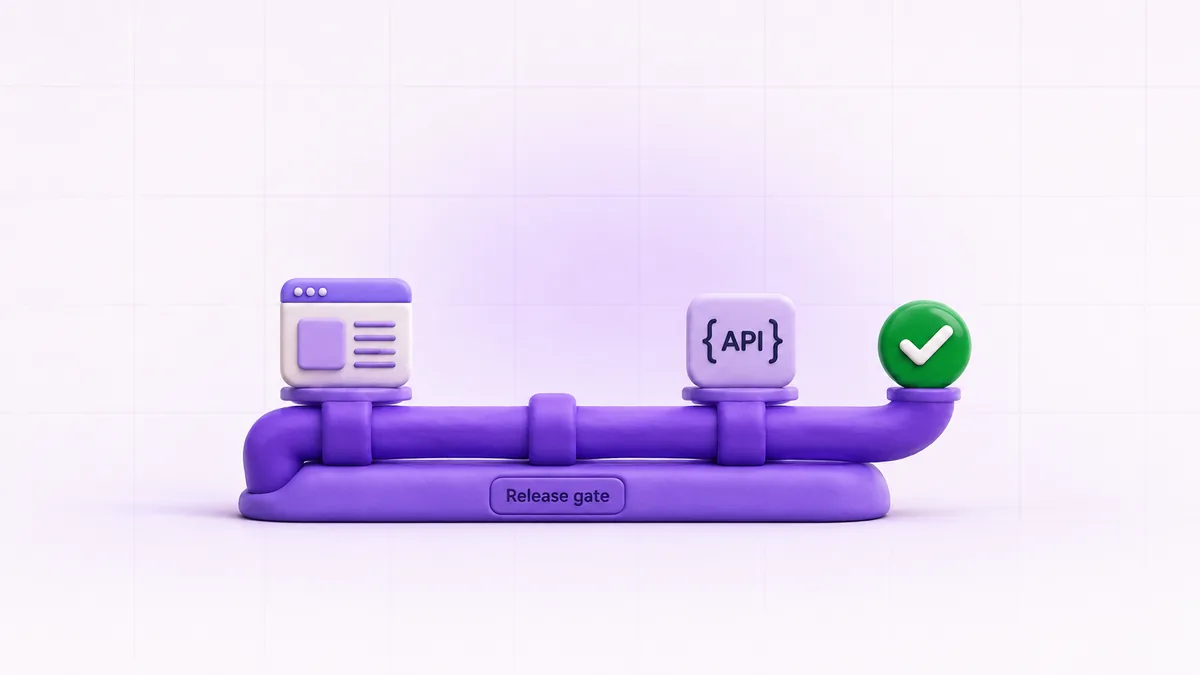

Photo by cottonbro studio on Pexels
Testim is the best choice in this list for Salesforce-heavy web teams that need reusable steps, adaptive locators, CI execution, and test-management reporting across complex CRM workflows. Testim documents stable-version support for four desktop browser families—Chrome, Firefox, Safari, and Edge Chromium—which gives teams a clear baseline for cross-browser planning (Testim Documentation — Recording a Web Test).
Testim’s smart-locator model uses multiple attributes to identify an element instead of depending on a single brittle selector. That approach can help in Salesforce, where generated markup and repeated component patterns make hand-maintained selectors expensive. Reusable groups and shared steps are also useful for login, navigation, record setup, and permission-sensitive workflows that appear across many cases.
The strongest Salesforce use cases are not simple page checks. They include role-based access, field visibility, approval flows, record transitions, document generation, and workflows that cross standard and custom objects. The best practices and tools for automating regression testing in Salesforce therefore need controlled users, known permission sets, resettable records, and assertions tied to business state—not just a stable element locator.
Testim can connect to TestRail and publish results automatically. Its documentation also states that a Testim project may connect to one test-management system at a time, which matters for organizations running parallel migration or multi-team governance models (Testim Documentation — TestRail Integration).
Testim fits teams that want low-code authoring but still need reusable logic and custom code for the edges of a large web application. Salesforce programs benefit when business analysts can understand the flow while automation engineers handle data setup, APIs, authentication, and specialized assertions.
It also fits mixed portfolios where Salesforce is central but not the only web system under test. The browser coverage and CI model allow the same platform to test surrounding portals and administrative tools, provided the team maintains clear environment and data boundaries.
The main tradeoff is that Salesforce complexity does not disappear behind smart locators. Metadata changes, managed-package upgrades, permission differences, asynchronous jobs, and environment-specific data can still break a test or make a failure hard to reproduce.
Custom code remains necessary for API-based setup, cleanup, dynamic values, file checks, and nonstandard components. Confirm how that code is versioned, reviewed, and executed, and test the browser matrix against the exact Salesforce features your users rely on rather than assuming every flow behaves identically.
The clearest comparison is to normalize ownership, execution, traceability, and maintenance instead of ranking tools by the amount of AI language on their product pages. In 2017, Google reported flaky-test rates of 0.5% for small tests, 1.6% for medium tests, and 14% for large tests, an older but still useful result showing why test scope and diagnosis matter more than authoring convenience alone (Google Testing Blog, Where Do Our Flaky Tests Come From?).
| Tool | Best fit | Authoring and execution model | Code ownership and deployment | CI/CD, TestRail, and artifacts | Pricing and maintenance | Main limitation |
|---|---|---|---|---|---|---|
| CogWorkLabs Web Regression Testing Tool | Playwright-led enterprise web apps | Repository-based Playwright checks | Customer-visible code; confirm deployment | CI, TestRail sync, trace reporting | Scoped product or implementation; agreed maintenance owner | Public benchmark and broad platform details need verification |
| QA Wolf | Outsourced Playwright coverage | Managed suite and maintenance service | Verify access, export, and handoff | Managed execution; confirm TestRail and artifact needs | Managed service plus usage rates | Less direct operational control |
| Momentic | Natural-language browser tests | Plain-language intent and adaptive elements | Verify export, review, and private execution | Confirm current CI and test-management support | Credit plans with run estimates | Abstraction can limit customization |
| Mabl | Low-code browser and API CI testing | Visual journeys, API checks, self-healing | Managed platform; verify export limits | Deployment triggers and centralized diagnostics | Cloud credits plus local runner duties | Platform dependence and credit economics |
| Testim | Salesforce-heavy web teams | Low-code authoring, smart locators, custom code | Verify export and repository controls | CI, TestRail publishing, failure analysis | Sales-led pricing; customer maintenance | Data, permissions, and custom components still need engineering |
Code ownership decides how easily a suite can move, be reviewed, or survive a vendor change. A repository-first Playwright system gives developers ordinary diffs, branching, dependency control, and the ability to run outside a vendor UI. Managed or low-code systems may reduce setup and maintenance work, but buyers should ask what can be exported, whether custom libraries are supported, and how a handoff would work.
Portability is not enough if nobody can maintain the code. The decisive question is who can diagnose and repair a release-blocking failure under delivery pressure.
CI/CD fit means more than having a plugin. A useful integration can receive the build context, select the right suite, pass environment variables securely, run in parallel where appropriate, preserve traces or videos, and return a machine-readable result that can gate deployment. GitHub Actions documentation illustrates the broader execution model: jobs need controlled runners, secrets, artifacts, and explicit pass-or-fail behavior.
Automated regression testing tools for web applications with Playwright CI runs, TestRail sync, and trace reports.
TestRail fit also varies. Confirm how case identifiers are stored, whether retries create duplicate runs, and whether failed CI jobs link to the exact evidence a tester needs.
License cost is only one part of the decision. The operating model includes environment setup, runner capacity, parallel execution, flaky-test investigation, test-data resets, locator repairs, custom code, and the time needed to decide whether a healed step is still valid.
Managed services expose more cost in a contract; low-code platforms shift it into subscriptions, credits, and administration; code-first systems place it on internal engineering. Compare recurring work, not just the first invoice.

Photo by Matheus Bertelli on Pexels
We selected these tools by giving the greatest weight to repeatability, diagnosis, ownership, and release fit, then using AI features as supporting evidence rather than the main score. In 2021, an empirical study of flaky Python tests attributed 59% of identified cases to order dependency, 28% to test infrastructure, and the remaining 13% to network behavior, randomness, and other causes (An Empirical Study of Flaky Tests in Python).
That cause breakdown matters because a tool cannot repair every failure by choosing a better selector. Isolation, data control, infrastructure visibility, retry policy, and reproducibility need to be evaluated directly.
The scorecard used four weight bands rather than pretending every criterion has equal impact:
| Weight band | Criteria | Why it matters |
|---|---|---|
| Highest | Deterministic execution, failure reproducibility, maintainability | A release gate must produce the same result for the same product state and give engineers enough evidence to explain failures. |
| High | Code ownership, portability, Playwright and browser fit, CI/CD controls | These factors determine whether the suite fits the engineering system and can be operated over time. |
| High | TestRail traceability, traces, videos, logs, and release reporting | Evidence connects requirements to execution and shortens the path from failed run to accountable decision. |
| Medium | Security controls, private-network execution, test-data handling, deployment flexibility | These become decisive for internal systems, regulated data, and restricted environments. |
| Medium | License model, credits, infrastructure, and maintenance responsibility | Total cost depends on who builds, runs, investigates, and repairs the suite—not simply the subscription. |
A tool received no extra credit merely for labeling a locator, recorder, or assistant as AI. The feature had to improve test creation, repeatability, maintenance, diagnosis, or useful coverage in a way that could be observed in a pilot.
Official documentation and pricing pages were used for product capabilities, browser support, integrations, published limits, and vendor claims. Vendor customer stories were treated as examples rather than general benchmarks. Older research was retained only where it explains a durable engineering issue, and its year is stated so readers can weigh its age.
CogWorkLabs’ product is ranked first because it closely matches the stated enterprise brief, and CogWorkLabs’ ownership is disclosed. That does not make every undocumented capability true. Unknown deployment details, pricing, browser scope, and benchmark results remain items to verify rather than assumptions folded into the score.
The shortlist also has a boundary: it focuses on web regression systems that can participate in CI/CD. It does not claim to cover every mobile-native, desktop, performance, accessibility, or security-testing platform. Those categories may belong in the same release process, but they require their own evaluation criteria.
Choose an AI regression testing tool by first deciding who must own failures, test code, infrastructure, and evidence when a release is blocked. In 2017, Google found that large tests were flaky at a 14% rate, compared with 1.6% for medium tests and 0.5% for small tests; although the study is older, it remains a practical warning that broad end-to-end scenarios carry more maintenance risk (Google Testing Blog, Where Do Our Flaky Tests Come From?).
Choose code ownership when developers need ordinary pull requests, local debugging, custom fixtures, dependency control, and the option to move execution between CI providers. A Playwright repository is often the clearest model for that need.
Choose managed execution when the organization wants coverage and maintenance as an outcome and accepts a service dependency. Choose a managed low-code platform when non-developers need to author workflows while engineering still supports data and environments. Ownership still needs a named maintenance owner.
Check the exact chain from requirement to deployment decision. The test case needs a stable identifier, the executable check needs a reliable mapping, the CI job needs secure access to the environment, and the result needs to return with enough evidence to support a release gate.
Ask practical questions: Can a rerun preserve the original failure? Are traces retained long enough? Can the runner reach private services? Does TestRail update the intended run without duplicates?
A tool that generates tests quickly but cannot answer those questions may still be useful for exploration. It is not yet an enterprise release system.
Plan for flakiness as a design problem, not a nuisance that retries will hide. The 2021 Python study found that order dependency accounted for 59% of identified flaky tests and infrastructure for 28%, which means locator healing addresses only part of the failure surface (An Empirical Study of Flaky Tests in Python).
Control test data, isolate cases, limit shared state, and keep broad journeys focused on critical paths. Push lower-level validation into API or component tests. Use retries to collect evidence, not to turn an unexplained failure into a passing release. Ambiguous failures often cost more than slower runs with clean traces.
Add dynamic application security testing as a separate CI stage because functional AI testing tools do not replace vulnerability scanning. Tools for automating regression testing with DAST coverage usually combine a browser suite with a scanner such as OWASP ZAP rather than expecting one product to perform both jobs.
The execution boundary should be explicit. The ZAP Docker guide describes a baseline scan whose spider defaults to one minute and performs passive scanning, while the full scan has no default time limit and adds active scanning. That difference affects where each check belongs: a passive baseline may run frequently, while an active scan may need a controlled environment, authorization, and a separate schedule.
Keep reports separate but join them at the release decision. Browser failures and DAST findings require different owners, triage rules, and acceptance criteria.
Before selecting a platform, run one representative workflow through the full chain: test data setup, browser execution, evidence capture, TestRail update, release gate, and any required security scan. That single exercise exposes ownership gaps faster than a feature checklist.
Choose CogWorkLabs’ tool when Playwright code, TestRail traceability, CI evidence, and an enterprise delivery path are the priority; choose QA Wolf when managed coverage is more valuable than internal framework ownership. Momentic is the strongest authoring-first option, Mabl suits low-code CI/CD teams, and Testim stands out for Salesforce-heavy workflows.
In 2025, the World Quality Report found that 43% of organizations were experimenting with generative AI in QA while 15% had scaled it enterprise-wide, reinforcing that the winning choice is the one your team can operate beyond a pilot (Capgemini, Sogeti, and OpenText, World Quality Report 2025-26). The final decision should follow ownership, infrastructure, traceability, and maintenance needs—not the loudest AI claim.
Awais Shahid is an Automation Consultant and Solutions Advisor at CogWorkLabs. He runs discovery, maps client processes, and turns them into scoped, build-ready plans for custom scripting and automation — staying the single point of contact through sign-off.
Compare the best AI email marketing automation tools 2025 2026 for content, personalization, send-time optimization, CRM workflows, and reply handling.
Awais AhmadJul 15, 2026
Compare the best AI tools to automate client onboarding and nurture sequences, with pricing, workflow fit, setup limits, and clear picks for agencies.
Awais AhmadJul 16, 2026
Compare DM automation tools for Instagram by comment triggers, CRM integration, UTM tracking, pricing, and Meta compliance to choose the right fit today.
 Mughees RehmanJul 15, 2026