
Workflow Automation
9 Best AI Email Marketing Automation Tools for 2026
Compare the best AI email marketing automation tools 2025 2026 for content, personalization, send-time optimization, CRM workflows, and reply handling.
 Awais AhmadJul 15, 2026
 Awais AhmadJul 15, 2026
Choosing the wrong forecasting platform does not merely produce an untidy report; it can leave finance acting on invoices already paid, sales dates that have moved, and bank balances that arrived too late to guide a funding decision.
In 2025, more than 60% of treasury professionals identified cash or liquidity forecasting as their most challenging task, according to the Association for Financial Professionals, 2025 Treasury Benchmarking Survey Report. That finding explains why a useful best cash flow forecasting software comparison must examine the underlying data, not just dashboards and feature lists.
Accuracy also changes with the forecast horizon. In September 2025, EY found that 66% of frequent AI or machine-learning users described their one-week forecasts as highly accurate, compared with 53% of all treasurers; at 13 weeks, the figures fell to 45% and 35%, respectively (EY, Global DNA of the Treasurer Survey).
The seven tools below are therefore compared on the questions that affect forecast reliability: how they ingest AP and AR records, whether they reconcile payments, how they connect bank and accounting data, what they support across entities, and how much implementation work sits behind the subscription.
The right choice depends on whether your forecast is driven mainly by operational accounting data, bank transactions, consolidated reporting, startup planning, or enterprise treasury processes.
CogWorkLabs is the strongest fit for a Salesforce-to-QuickBooks Online weekly forecasting workflow. Trovata is the clearest corporate-treasury option for normalized bank data, while Float offers the simplest starting point for a smaller finance team. In September 2025, EY reported a 10-percentage-point gap between frequent AI users and all treasurers reporting highly accurate 13-week forecasts: 45% versus 35%.

Photo by www.kaboompics.com on Pexels
Cash Flow Forecasting Automation Software is the best fit when weekly cash expectations depend on connecting Salesforce pipeline activity with QuickBooks Online invoices, bills, payments, and current accounting balances.
CogWorkLabs owns this product, so its first-place position should be read in that context. It is included because the workflow directly matches the comparison topic: Salesforce supplies expected commercial activity, while QBO supplies recognized receivables, payables, payments, and accounting actuals.
That distinction matters. In September 2025, EY found that 25% of treasurers cited AP or AR process latency, another 25% cited poor financial-system integration, and just 38% rated their transactional data as very accurate (EY, Global DNA of the Treasurer Survey).
A dependable connector cannot treat every open Salesforce opportunity as incoming cash or every QBO invoice as an unpaid future receipt. Salesforce may expose changes to Amount, Probability, Stage, and Close Date through its OpportunityFieldHistory object, but those fields describe sales expectations rather than confirmed collection dates. QBO separately records invoices, customer payments, bills, and bill payments through the QuickBooks Online Accounting API.
The product’s practical role is to map those records into weekly AP, AR, and cash visibility. That makes it a relevant candidate for teams searching for the best cash flow forecasting software for mid-market companies and treasury teams, particularly where sales and accounting data are managed in separate systems.
The limitation is scope. This is a purpose-built workflow rather than a broad bank-connectivity or enterprise treasury suite. Public pricing is not listed, and requirements such as entity structure, field mapping, payment matching, refresh timing, and exception handling need to be scoped before implementation.
The CogWorkLabs cash flow forecasting automation software handles this layer by connecting Salesforce and QBO around weekly AP, AR, and cash movements, reducing the manual work required to rebuild the same forecast from separate exports.
Photo by Leeloo The First on Pexels
Centime is the strongest option for controllers who want cash forecasting closely tied to accounts payable, accounts receivable, and payment activity.
For this 2026 comparison, Centime Pricing documents integrations with QuickBooks, NetSuite, and Sage Intacct, custom volume-based pricing, and typical onboarding of 7–21 business days. That published implementation range is useful because many comparison pages discuss subscriptions while saying little about the work required to connect records and validate opening balances.
Centime’s main advantage is that forecasting sits beside operational finance processes. A controller can examine a rolling 13-week position in the same environment used to understand upcoming supplier payments, customer receipts, and current banking activity. This reduces the gap between a forecast assumption and the transaction or invoice responsible for it.
For teams evaluating the best cash flow forecasting software for controllers and finance teams, that connection is often more valuable than a longer strategic-planning horizon. A delayed customer payment can be moved to a more credible receipt date, while an AP schedule can reflect which bills are approved, disputed, or intentionally held.
The accounting-system coverage is also clearer than it is for many early-stage forecasting products. QuickBooks suits smaller and mid-market finance teams, while NetSuite and Sage Intacct support more structured accounting environments.
There are still limits to investigate. Pricing requires a quote, so total cost will depend on transaction volume, modules, entities, and onboarding needs. Buyers should also ask how bank feeds are refreshed, how duplicate invoices are handled, whether paid-status matching is automatic, and how changes to a promised payment date reach the forecast.
Centime is less compelling when the primary requirement is managing hundreds of bank accounts or producing a group-wide treasury position from many banking relationships. In that case, Trovata or HighRadius offers a more treasury-led operating model.

Photo by Tiger Lily on Pexels
Trovata is the best choice for corporate treasury teams that need normalized bank data to drive cash positioning, forecasting, reconciliation, and entity-level analysis.
For this 2026 comparison, Trovata Pricing lists a base package at $24,000 per year, including one managed bank connection, up to 100 accounts, one million stored transactions, ten users, forecasting, reconciliation, entity management, APIs, and standard support.
Those limits make the commercial model unusually concrete. A buyer can estimate whether the base package covers the current banking footprint before requesting a broader configuration. It also makes clear that Trovata is aimed at a treasury function rather than a small company that needs a simple extension of its accounting ledger.
The product’s core value is the data layer. Bank transactions arrive in different formats, with inconsistent descriptions, account structures, currencies, and classifications. Trovata’s model is designed to collect and normalize that activity before it reaches cash-position and forecasting views. That makes it one of the clearest candidates for the best cash flow forecasting software for corporate treasury.
Forecast-versus-actual tracking is another important fit. A treasury team can compare expected movements against what appeared in the bank, then refine timing assumptions or categorization rules. Short-term forecasts can focus on known transactions and recurring patterns, while longer views can incorporate broader assumptions and scenarios.
Trovata may be excessive for a controller managing a small number of entities through one accounting platform. Its base price, bank-connection model, and transaction capacity indicate a more substantial operating environment. AP and AR workflows may also require data from an ERP or another source rather than being managed as deeply as they are in an operational finance platform.
Choose Trovata when bank connectivity and transaction normalization are the foundation of the forecast. Choose an accounting-led product when invoice status, collections activity, or supplier-payment workflows are the harder problem.

Photo by Pixabay on Pexels
Fathom is the best option for finance teams that need cash-flow forecasting within consolidated management reporting across several companies.
For this 2026 comparison, Fathom Pricing lists its one-company Starter plan at AUD $65 per month and includes unlimited users, cash-flow forecasting, reporting, analysis, multi-currency consolidation, and a 14-day trial.
Fathom takes a reporting-led approach. It combines profit-and-loss, balance-sheet, and cash-flow assumptions into a three-way forecast, meaning changes in one statement flow into the others. That is useful when management needs to understand how revenue, margins, debt, working capital, and capital spending affect both the balance sheet and future cash.
The multi-entity model is the main differentiator. Separate companies can be consolidated for group reporting, and currency translation can present results in a common reporting currency. This makes Fathom a credible cash flow forecasting software with foreign currency support when the requirement is consolidated reporting.
Buyers should distinguish currency translation from transaction-level foreign-exchange forecasting. Multi-currency consolidation can translate company results into a reporting currency, but that does not automatically mean the platform models every foreign-currency receipt, payment, hedge, or bank balance at the transaction level. Treasury teams with material FX exposure should confirm the exact behavior before selection.
Fathom also suits teams that want scenarios to remain connected to management reports. A base case, downside case, or expansion plan can be presented alongside actual financial results without rebuilding separate board packs.
Its limitation is operational immediacy. Fathom is better at explaining the financial model than controlling daily collections, supplier payments, or bank liquidity. It can show what a changed debtor assumption does to cash, but another system may still be needed to manage the invoice, collection conversation, or payment approval creating that movement.

Photo by RDNE Stock project on Pexels
Float is the simplest choice for a small finance team that wants a visual cash forecast connected to its accounting records without adopting a full treasury platform.
For this 2026 comparison, Float documents a rolling 13-week view, a monthly forecast extending up to three years, connections with Xero and QuickBooks Online, and a 14-day trial.
That combination covers two common planning questions. The weekly view shows whether upcoming receipts and payments create a short-term cash gap, while the longer monthly view shows how hiring, growth, delayed sales, or larger expenses affect the wider runway.
Float is especially approachable when the starting data already lives in Xero or QBO. Imported invoices and bills provide a baseline, and users can adjust expected payment dates when the accounting due date is no longer credible. Scenarios can then separate the base forecast from a slower-collections or higher-cost case.
The visual interface is an advantage for owners and finance managers who need to review cash without maintaining a complex model. The system is easier to explain during a management meeting because the assumptions and resulting balance are visible in the same forecast.
Its boundaries appear when the company adds complex entity structures, detailed approval controls, many banking relationships, or more demanding foreign-currency requirements. A consolidated group may need stronger intercompany handling, while treasury teams may require direct bank-data normalization and reconciliation.
Float is therefore a practical small-team choice, not a smaller version of an enterprise treasury system. Confirm current support for every accounting platform, entity, user, and currency requirement before committing, especially if the business is likely to outgrow a single-ledger forecasting process.

Photo by Kindel Media on Pexels
Runway is the best fit for venture-backed companies that treat cash forecasting as part of headcount, burn-rate, fundraising, and operating-plan management.
For this 2026 comparison, Runway Pricing lists more than 750 integrations, no implementation fees, unlimited collaboration, shared Slack support, and hands-on support. Its published product material also covers scenarios, headcount planning, fundraising preparation, and multi-entity rollups.
Runway is closer to an FP&A workspace than a traditional daily cash-management application. Finance can connect operating assumptions to the forecast, so hiring plans, compensation changes, revenue targets, and fundraising scenarios affect projected runway without requiring a separate model for each department.
That model works well for startup decision-making. A finance lead can show how an additional hiring plan changes burn, how a delayed financing round affects available cash, or how a revenue downside case moves the runway date. Collaboration also lets budget owners participate without passing spreadsheet versions between teams.
The broad integration count is helpful, but buyers still need to inspect the specific connectors that matter. An integration directory may contain many applications while the critical accounting, banking, payroll, CRM, or data-warehouse connector uses a different refresh schedule or mapping depth.
Runway is not automatically the right choice for operational receivables and payables control. A forecast may include expected collections and supplier costs, but teams that need dispute tracking, promise-to-pay dates, cash application, or payment approvals may require a dedicated AR, AP, or treasury system beside it.
Choose Runway when the main question is how operating decisions affect burn and runway. Choose an accounting-led or treasury-led platform when the harder task is determining which invoice, payment, or bank transaction will move cash next.

Photo by Vitaly Gariev on Pexels
HighRadius is the strongest fit for large enterprises that need treasury forecasting connected to receivables, collections, cash application, and complex financial systems.
For this 2026 comparison, HighRadius Treasury Management Software advertises forecasting up to 12 months ahead and accuracy of up to 95%. The accuracy figure is a vendor claim, not an independently reproduced benchmark, so buyers should ask how it was measured, which horizon it covers, and what data was included.
That qualification matters because forecast performance normally declines or changes by horizon. In September 2025, EY reported an AI-associated accuracy uplift of 13 percentage points at one week, 11 points at 13 weeks, three points at six months, and seven points at 12 months.
HighRadius has a broader operational scope than most products in this list. Treasury forecasting can sit beside receivables management, collections, cash application, and other finance processes. For a large company, that creates a path from customer-payment behavior to expected cash rather than relying entirely on summary ledger balances.
This makes it a serious candidate for buyers evaluating the best cash flow forecasting software for large enterprises, CFO teams, and treasury departments. It is particularly relevant where the forecasting problem crosses ERP data, bank information, receivables operations, and many legal entities.
The tradeoff is implementation. Enterprise platforms require process design, source-system mapping, security review, historical-data cleanup, user roles, testing, and agreement on forecast ownership. Pricing is not publicly listed in the supplied research, so software fees cannot be separated from integration and change-management costs without a detailed proposal.
HighRadius is unlikely to be the sensible choice for a small finance department seeking a quick QBO forecast. It earns consideration when the organization already has the scale, system complexity, and treasury maturity to use its wider scope.
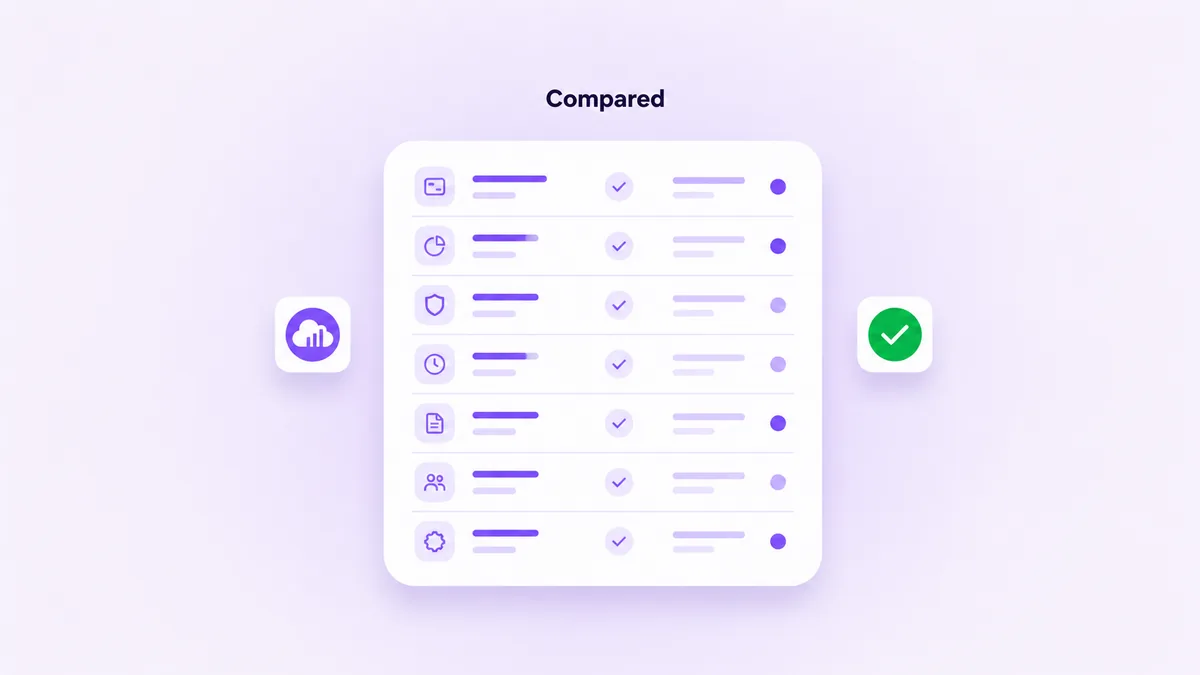
The comparison shows that no single tool leads every category: the best choice follows the system containing the most reliable cash-driving data.
For this 2026 review, Centime publishes an onboarding range of 7–21 business days, while several other vendors leave setup effort or pricing dependent on scope (Centime Pricing). That difference is why implementation and cost transparency appear beside forecasting features.
| Tool | Best fit | Pricing model | Salesforce | QBO | AP and AR depth | Bank data | Multi-entity | Foreign currency | Forecast horizon | Scenarios | Likely setup effort |
|---|---|---|---|---|---|---|---|---|---|---|---|
| Cash Flow Forecasting Automation Software | Salesforce-to-QBO weekly forecasting | Not publicly listed | Direct workflow input | Direct accounting input | Weekly invoice, bill, payment, AP and AR mapping | Through connected accounting data | Depends on mapped books | Not publicly confirmed | Weekly operational view | Not publicly confirmed | Custom field and reconciliation mapping |
| Centime | Controllers managing AP, AR and cash | Custom, volume-based quote | Not publicly confirmed | Supported | Strong operational AP and AR focus | Included in cash-planning workflow | Available; confirm entity scope | Confirm with vendor | Rolling 13-week planning | Supported | Published onboarding of 7–21 business days |
| Trovata | Corporate treasury and bank-led forecasting | Base package at $24,000 per year | Not a stated core connector | Not a stated core connector | Usually supplied from connected finance systems | Core strength | Entity management included | Confirm account and currency scope | Short- and long-term forecasting | Supported | Managed bank connection and treasury configuration |
| Fathom | Consolidated reporting and three-way forecasts | AUD $65 per month for one company | Not a stated core connector | Supported | Driven by accounting assumptions | Primarily through accounting records | Core reporting strength | Multi-currency consolidation | Management-planning horizon | Supported | Lower for clean accounting files; higher for consolidation |
| Float | Small teams using Xero or QBO | Public plans; verify current tier | Not a stated core connector | Supported | Invoice and bill timing adjustments | Through accounting connections | Better suited to simpler structures | Confirm current support | 13 weeks plus monthly views up to three years | Supported | Relatively light for clean accounting data |
| Runway | Venture-backed FP&A and runway planning | Quote-based; no implementation fees listed | Verify connector depth | Verify current connector | Planning-led rather than operational AR control | Available through integrations | Multi-entity rollups | Confirm by connector and entity | Strategic operating and runway planning | Core strength | Data-model and assumption mapping still required |
| HighRadius | Large enterprise treasury and receivables | Not publicly listed | Depends on enterprise architecture | Not aimed primarily at QBO deployments | Deep AR, collections and cash-application scope | Treasury-level connectivity | Designed for complex enterprises | Confirm treasury configuration | Up to 12 months | Supported | High due to ERP, bank, process and security scope |
The table also clarifies why the best treasury management software for cash flow forecasting in 2025 and 2026 cannot be selected from horizon length alone. A 12-month forecast built from weak payment-status data may be less useful than a 13-week forecast that correctly reconciles paid invoices, delayed collections, and approved supplier payments.
Cash flow forecasting automation software connects Salesforce and QBO for accurate weekly AP, AR, and cash visibility.
The tools were selected by matching their documented data sources and operating models to distinct forecasting problems rather than assigning one universal winner.
For this 2026 methodology, Forecasting: Principles and Practice recommends evaluating models on unseen observations, with a test set typically covering about 20% of available data and lasting at least as long as the required forecast horizon (Forecasting: Principles and Practice, Third Edition). Rolling-origin validation, where the model is repeatedly tested from different historical starting points, is preferable when sufficient history exists.
The comparison considered data quality, forecast validation, AP and AR depth, accounting and bank integrations, multi-entity support, scenarios, usability, implementation effort, reporting, and cost transparency. Official product documentation and pricing pages were given more weight than generic review summaries. Unknown prices or connector details were left as unknown rather than inferred.
The key features of AI-powered cash flow forecasting software should include more than a predictive label. Buyers should look for a defined forecast horizon, traceable inputs, exception handling, variance reporting, backtesting, and a clear method for updating assumptions when actual transactions differ from the forecast.
Forecast accuracy should be tested separately for each horizon and cash-flow category. A weekly liquidity forecast, a 13-week treasury forecast, and a yearly planning model solve different problems and should not share one headline accuracy score.
Start by withholding recent historical observations from model fitting. Run the forecast as though those periods had not yet occurred, then compare projected receipts, payments, and closing balances with actual results.
Useful measures include absolute error, which shows the cash-value difference; percentage error, which scales error relative to actual cash; and forecast bias, which reveals whether forecasts repeatedly overstate or understate liquidity. Percentage measures need care when actual values are near zero, because small denominators can produce misleadingly large errors.
Acceptance thresholds should be tied to decisions. A forecast is useful when its error stays within the liquidity buffer, borrowing headroom, or payment-planning tolerance set by the business—not simply because the vendor describes it as accurate.
CogWorkLabs owns the first product in this ranking. It was included because its Salesforce-to-QBO workflow directly fits the stated use case, not because it was compared through an independent laboratory test.
No claim in this article should be read as proof that the product will outperform every alternative. Trovata has a clearer bank-led treasury model, Fathom is better aligned with consolidated reporting, and HighRadius is designed for enterprise finance environments that require a broader operational scope.

Photo by RDNE Stock project on Pexels
The best tool is the one that can reconcile the records responsible for future cash, at the horizon and organizational scale where decisions are made.
The QuickBooks Online Accounting API documentation exposes invoices, bills, customer payments, bill payments, customers, vendors, accounts, and cash-flow reports as separate entities. A credible forecast must map their relationships instead of treating every invoice or bill as an unpaid future movement.
The difference between cash flow forecasting software and cash management software is mainly purpose. Forecasting software estimates future inflows, outflows, and balances. Cash-management software handles current liquidity activities such as bank positioning, transfers, payment control, reconciliation, and account visibility. Some treasury platforms combine both, while planning tools may focus almost entirely on future assumptions.
Choose an accounting-led platform when invoices, bills, payment status, and collection timing explain most short-term cash movement. Centime, Float, or a Salesforce-to-QBO workflow fits this pattern.
Choose a bank-led platform when the treasury team needs consolidated positions across accounts and institutions. Trovata is designed around that data foundation, while HighRadius addresses a broader enterprise treasury and receivables environment.
Choose a planning-led product when headcount, fundraising, revenue scenarios, and department budgets are the main variables. Runway fits venture-backed operating plans, while Fathom connects financial assumptions to consolidated management reporting.
Salesforce pipeline records require special caution. The official Salesforce object reference shows that opportunity history can track Amount, Probability, Stage, and Close Date, but those values do not confirm that a deal will close, an invoice will be issued, or payment will arrive on the entered date. A forecasting workflow needs explicit conversion rules between opportunity timing, billing events, payment terms, and collection expectations.
Multi-entity support should cover the records and controls behind consolidation, not merely display several company names in a filter.
Ask whether each entity keeps a separate chart of accounts, bank connection, reporting currency, payment calendar, and forecast owner. Confirm how intercompany invoices and transfers are treated so the same movement is not counted as both an inflow and an outflow at group level.
For separate QBO books, determine whether the connector can refresh each company independently and preserve entity identifiers through the forecast. For Salesforce, identify whether opportunities belong to the same legal entities that issue invoices. If the CRM represents regions or sales teams while QBO represents legal companies, a mapping table will be required.
Foreign-currency buyers should also ask whether the product performs report translation, transaction-level conversion, or both. A consolidated report shown in one currency does not necessarily model the timing and rate risk of foreign-currency receipts and payments.
Implementation should be evaluated as a data and ownership project, not merely a connector installation.
In September 2025, EY found that 26% of treasurers cited inadequate aggregation technology, 25% cited AP or AR process latency, 25% cited poor financial-system integration, 22% cited inconsistent cross-system data, and 22% cited missing real-time information (EY, Global DNA of the Treasurer Survey).
Ask the vendor to demonstrate how the implementation handles already-paid invoices, duplicate records, partial payments, disputed receivables, credit notes, bill-payment status, promise-to-pay dates, and procurement commitments not yet posted to the accounting ledger. Also confirm refresh frequency, API limits, failed-sync alerts, historical backfill, user permissions, audit logs, and responsibility for correcting source data.
Security review should cover authentication, credential storage, role-based access, data retention, and how access is removed when an employee or implementation partner leaves. The team should also know who signs off the opening forecast and who investigates variances after launch.
If the first mapping session reveals that sales, accounting, and treasury use different definitions of an expected receipt, begin with a shared cash-event model before configuring dashboards. A short list of agreed event states—expected, invoiced, partially paid, paid, disputed, or delayed—usually exposes the integration decisions that matter most.
Cash flow forecasting software should be selected according to the data source, forecast horizon, and decision being supported rather than a generic feature count.
For this 2026 comparison, Float documents both a rolling 13-week view and a monthly forecast extending up to three years, showing why one product may support several horizons while still being aimed at a particular company size (Float for Consulting Businesses).
Cash flow can be forecast in budgeting software by starting with the opening bank balance, importing actual accounting results, and assigning expected dates to future receipts and payments. Add assumptions for payroll, taxes, debt, capital spending, and revenue that has not yet reached the ledger. Run a base case and at least one downside scenario, then compare each completed period with actual cash and update assumptions where timing or amounts were wrong.
Use software that connects to the records driving your cash movements and supports the horizon you manage. Float suits a smaller Xero or QBO team, Centime fits AP- and AR-led planning, Trovata fits bank-led corporate treasury, Fathom supports consolidated reporting, Runway supports startup FP&A, and HighRadius serves complex enterprise treasury. A Salesforce-to-QBO workflow is more suitable when commercial pipeline and accounting activity must be reconciled into one weekly view.
The best automated cash flow forecasting software is the product that correctly matches invoices, payments, bills, bank movements, and operational assumptions for your business. Automation should remove repeated exports and calculations, but it should not hide the rules producing the forecast. Evaluate each tool by running historical forecast-versus-actual tests, reviewing exceptions, and confirming who corrects inaccurate source records before relying on its projected balance.
If a historical test shows that most forecast error comes from one source—such as delayed receivables or unreliable opportunity dates—start by fixing that data path rather than replacing the entire finance stack. The narrowest correction that improves forecast-versus-actual results is usually the safest first move.
Cash Flow Forecasting Automation Software is the strongest fit for a mid-market Salesforce-to-QBO workflow, Trovata is the clearest enterprise treasury alternative for bank-led forecasting, and Float is the easiest starting point for a smaller accounting team.
In 2025, AFP found that more than 60% of treasury professionals considered cash or liquidity forecasting their most challenging task. Reliable reconciliation, measurable forecast accuracy, and ownership of source-data exceptions therefore matter more than the platform with the longest feature list.
Awais Ahmad is a Senior RPA and Workflow Engineer at CogWorkLabs. He builds production workflow automation with retries that actually retry, idempotency, and audit trails — turning brittle scripts into RPA that holds up at scale.
Compare the best AI email marketing automation tools 2025 2026 for content, personalization, send-time optimization, CRM workflows, and reply handling.
Awais AhmadJul 15, 2026
Compare DM automation tools for Instagram by comment triggers, CRM integration, UTM tracking, pricing, and Meta compliance to choose the right fit today.
 Mughees RehmanJul 15, 2026
Compare the best WhatsApp AI chatbot tools for RAG answers, human handoff, Meta setup, website integration, and predictable total costs for business in 2026.
Mughees RehmanJul 15, 2026