
Best Of
7 Best Free Social Media Scheduling Tools for 2026
Compare 7 free social media posting and scheduling tools by account limits, supported networks, automation, content creation, and real upgrade costs today.
 Awais AhmadMar 30, 2026
 Zegham AliApr 24, 2026
The benefits of using an AI-powered social media assistant become obvious when content demand rises faster than a team can draft, review, and publish without losing quality. In 2025, Adobe found that 66% of more than 1,600 surveyed marketers said demand for social content was growing fastest, while 54% named short-form video as a fast-growing format (Adobe, “71% of Marketers Say Content Demand to Increase 5x”).
The pressure is not just writing. The same Adobe research found that 58% of marketers spent more than 40% of their time managing reviews and approvals. Meanwhile, in 2025, the Content Marketing Institute reported that 95% of 1,015 surveyed B2B marketers used AI-powered applications, but 38% were using or implementing social tools for scheduling, analysis, or automated posting (Content Marketing Institute, “B2B Content Marketing Trends & Research”).
That gap matters. A useful assistant is not merely a caption box. It is a controlled working system that gathers context, prepares platform-specific drafts, routes approvals, publishes through permitted interfaces, captures results, and improves the next content cycle.
The main value comes from faster execution with clearer control, not from publishing more AI-written text for its own sake.
- Drafting becomes faster when the assistant starts from approved source material instead of a blank prompt.
- Shared memory keeps brand rules, examples, and reviewer feedback available at draft time.
- Human approval remains essential for sensitive or high-risk posts.
- In 2025, the Content Marketing Institute found that productivity improved for 87% of AI-content users, while content performance improved for 39%, showing that speed and results are different measures (Content Marketing Institute).
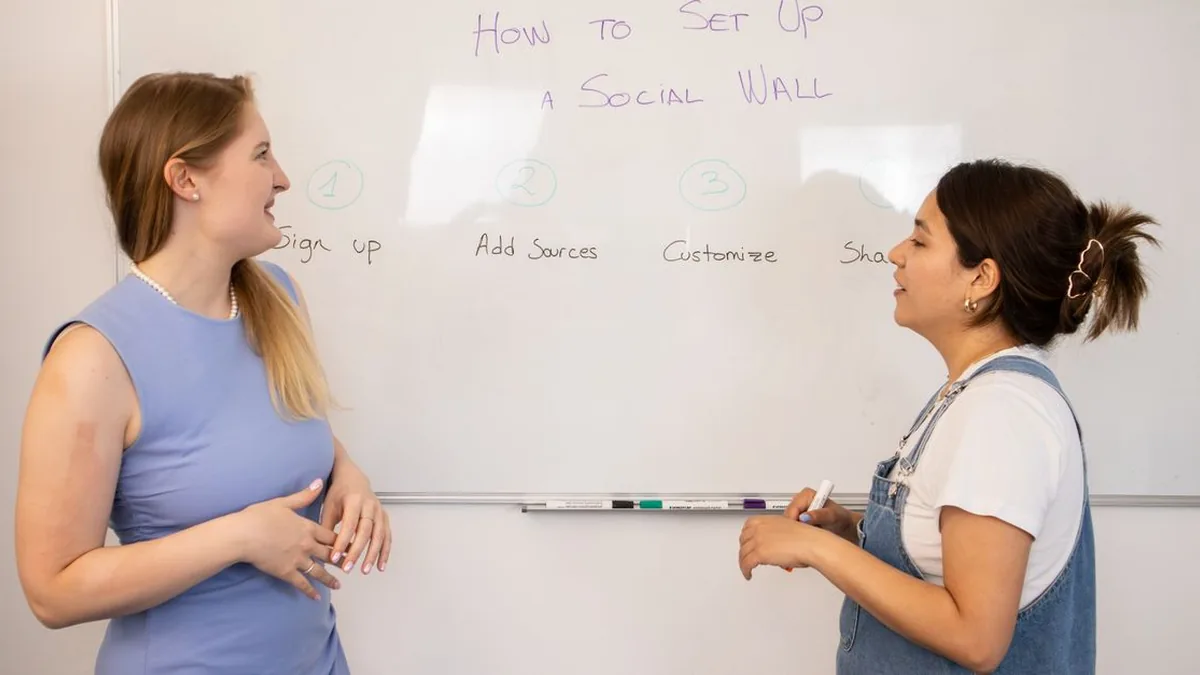
Photo by Walls.io on Pexels
An AI-powered social media assistant turns approved inputs into drafts, decisions, publishing actions, and learning records while keeping people responsible for policy and judgment. In 2025, the Content Marketing Institute found that 38% of surveyed B2B marketers were using or implementing social tools for scheduling, analysis, or automated posting, which shows the category already extends beyond text generation (Content Marketing Institute).
A chatbot answers a user in conversation. A caption generator produces copy from a prompt. A scheduler publishes approved content at a chosen time. An assistant connects those jobs: it receives source material, applies rules, calls tools, waits for approval, records what happened, and passes results into the next run. A more autonomous agent can choose among actions, but autonomy should remain bounded by permissions, approved data, and explicit stop conditions.
The assistant can convert a transcript, article, meeting note, product update, customer question, or saved link into several platform-ready drafts. It should preserve the source claim, tag uncertain statements for review, and separate reusable ideas from platform-specific wording.
The assistant can query permitted public data, social-listening feeds, and internal audience notes to identify themes worth discussing. Monitoring is useful only when the system filters relevance, freshness, source quality, and brand fit before proposing an angle.
The assistant sends each draft into an approval state rather than treating generation as permission to publish. A reviewer can edit, reject, request another version, or release the post through official publishing interfaces such as the X Developer Platform or Instagram Platform documentation.
The assistant stores the post topic, source, format, edits, approval outcome, publish status, and later performance signals. That history lets the next draft use evidence from the team’s own account rather than generic advice.
An AI assistant creates more usable posts in less time by turning existing material into review-ready drafts and variations. In 2025, the Content Marketing Institute found that AI-content users reported gains in productivity at 87% and operational efficiency at 80%, compared with 39% reporting better content performance (Content Marketing Institute).
The largest saving usually comes before the first draft. Instead of asking a marketer to reread a webinar transcript, find the useful passage, choose an angle, and rewrite it for each network, the assistant can retrieve the source, extract candidate claims, and prepare several versions with links back to the evidence.
The Buffer AI Assistant can generate social media posts from a prompt and rework existing copy, which is useful for quick ideation. The broader Buffer AI Assistant generate social media posts feature becomes more valuable when the prompt includes audience, channel, objective, examples, and prohibited claims. Without that context, faster generation often produces more editing rather than less work.
A stronger workflow also separates drafting from verification. The system can mark claims that need a source, check links before approval, and keep visual requests beside the copy. That turns human review into a focused decision about accuracy, tone, and timing instead of cleanup after an unconstrained prompt.
A person still decides whether the idea is worth saying, whether the claim is fair, and whether the moment is appropriate. The assistant cannot know that a customer story is confidential, a joke will land badly, or a product statement has changed unless those constraints are available in its context.
The practical goal is not zero editing. It is a higher share of drafts that are worth reviewing. Track how often a draft is approved with light edits, rejected outright, or rewritten from scratch. If the rewrite rate stays high, the problem is usually poor source material, weak instructions, or missing brand examples—not a need for more generated variants.

Photo by Walls.io on Pexels
A shared memory keeps brand voice consistent by giving every draft access to the same approved rules, examples, and reviewer decisions. In 2025, Adobe found that 89% of surveyed marketers worked with three or more approval stages, so preserving decisions across reviewers is a practical control, not a cosmetic feature (Adobe).
“Memory” does not mean the model silently remembers everything. It usually means a searchable store containing approved content and structured rules. At draft time, the system retrieves the small set of records most relevant to the topic, audience, platform, and campaign. This technique is often called retrieval: the assistant searches trusted material first, then uses the returned context while writing.
Store the material that changes decisions: brand language, product facts, audience objections, approved claims, prohibited topics, campaign notes, screenshots, useful links, past posts, reviewer comments, rejected drafts, and the reason each draft was rejected. Keep private customer data out unless the workflow has a clear legal basis, access policy, and retention rule.
Structure matters. A brand rule should carry a category, owner, approval status, effective date, and source. A past post should carry its platform, topic, format, final copy, edits, publish result, and performance window. Those fields make retrieval more precise than searching a folder full of unlabeled documents.
The assistant should retrieve by meaning and filters together. A request for an Instagram carousel about onboarding should search semantically for related examples, then filter for Instagram, approved status, the current brand version, and the relevant audience. The final prompt should contain only the strongest matches, not the entire archive.
Feedback closes the loop. When a reviewer changes “save time” to “remove manual handoffs,” the system can store both the edit and its reason. Repeated edits become a proposed rule for approval. That is how shared memory reduces the same correction appearing in every content cycle.
An AI assistant finds useful trends by collecting current signals, filtering them for relevance, and converting them into original angles before the moment passes. In 2026, the Typeface Signal Report found that 67% of more than 200 marketing professionals said outdated review processes caused missed cultural moments (Typeface, “Signal Report: Big Game Edition”).
Trend monitoring is a freshness problem as much as a discovery problem. As reviewed in 2026, the X recent-search documentation says the endpoint retrieves matching posts from the previous seven days. That window is useful for current conversations, but it cannot explain whether a theme is durable, seasonal, or merely noisy.
A dependable process starts with a narrow query tied to the brand’s audience, products, and expertise. The assistant collects candidate posts or themes, removes duplicates, scores freshness and relevance, and stores the evidence behind each suggestion. It then proposes an angle that connects the trend to a real customer problem or operating lesson.
The key output is not “this topic is popular.” It is a brief that says what happened, why the audience may care, what the brand can credibly add, which source supports the claim, and when the idea expires. That gives the reviewer enough context to approve, reshape, or ignore the suggestion.
The assistant should extract the underlying question, not imitate the viral wording. A trend about teams replacing tools, for example, might reveal anxiety about cost, migration risk, or lost data. The brand can answer that concern using its own experience, examples, and position.
Copying becomes less likely when the workflow retains source links, detects close phrasing, and asks for a distinct point of view. Slow approval can still defeat good monitoring: the same 2026 Typeface report found that 71% of large companies needed more than one day to approve quick-turn content, while 27% needed more than a week. A trend workflow therefore needs an approval lane designed for time-sensitive posts, not just a faster drafting model.

An AI assistant improves cross-platform publishing by preserving the core idea while changing the structure, media, and checks for each network. In Socialinsider’s benchmark, Instagram carousels averaged 0.55% engagement, Reels 0.52%, and static images 0.37%, which supports testing formats rather than posting identical assets everywhere (Socialinsider, “Impressions vs. Engagement”).
Suppose the source idea is: “Approval delays cause good trend ideas to expire.” The evidence and point of view stay the same. The presentation changes because X rewards concise, conversational framing, while Instagram usually needs a stronger visual structure and caption that supports the media.
Lead with the claim quickly: “The trend monitor worked. The approval queue killed the post.” Follow with the operational lesson and, when useful, a short thread explaining the fix. As reviewed in 2026, the X character-counting documentation states that a standard post can contain up to 280 characters, so the assistant must prioritize the hook, claim, and next thought instead of compressing an Instagram caption at the last moment.
The publishing check should confirm the final character count, link validity, media attachment, account permission, and duplicate status. The assistant should also preserve the source behind any statistic because a concise post leaves less room to explain uncertainty.
Turn the same lesson into a carousel: the first slide states the cost of slow approval, the middle slides show the broken flow, and the final slide gives the corrected approval path. The caption can add context, but the visual sequence must carry the argument without depending on a long text block.
The Buffer AI Assistant social media captions feature can help rewrite tone and length, but it does not remove the need for a platform brief that defines the visual format, audience, and claim. As reviewed in 2026, Meta’s Instagram content-publishing documentation limits professional accounts to 100 API-published posts in a rolling 24-hour period, with a carousel counted as one published post. A production workflow should therefore validate rate limits, asset readiness, account type, and publish state before releasing anything.
Human-in-the-loop approval keeps a person responsible for every publish decision while the assistant handles preparation and routing. In 2025, Adobe found that 89% of surveyed marketers used three or more approval stages and 58% spent more than 40% of their time on reviews and approvals, which makes explicit approval design central to the system (Adobe).
Human control should be represented as states the system can enforce: draft, awaiting review, changes requested, approved, scheduled, published, paused, and failed. Each transition records who acted, what changed, and which version moved forward. That audit trail matters when a reviewer needs to understand why the wrong claim reached a queue or why a post did not publish.
Mandatory approval is the safest starting state. Reviewers need the source material, generated draft, proposed media, platform preview, risk flags, and edit history in one place. They should be able to edit directly, reject with a reason, request a new version, pause the queue, or approve the exact version shown.
In the 2025 Content Marketing Institute benchmark, only 4% of 980 B2B marketers reported high trust in generative AI output; 67% reported medium trust, 28% low trust, and 1% no trust (Content Marketing Institute, “Content Marketing Statistics”). That distribution supports review as a normal operating step, not an exception reserved for obvious mistakes.
Autonomy should expand by action type, not by a vague confidence score. A team might allow the assistant to schedule an already approved evergreen post, while still requiring review for trend responses, product claims, customer stories, legal language, or anything using newly added source material.
Promotion to a less restrictive mode should require a stable approval record, low rewrite rate, reliable publishing, clean audit logs, and tested stop controls. Rollback should be immediate: one failed policy check, duplicate publish attempt, missing source, or unexpected account response returns the workflow to approval-required mode. The assistant earns narrower supervision by proving predictable behavior inside a defined boundary.
An AI assistant learns from engagement by connecting each result to the post’s topic, format, source, audience, and approval history. As reviewed in 2026, X states that non-public, organic, and promoted post metrics are available only for posts created within the previous 30 days, so collection must happen before that window closes (X Developer Platform, “Post Metrics”).
Start with the outcome the content was meant to influence. Awareness content may be judged by qualified reach and profile visits. Educational content may be judged by saves, meaningful replies, or visits to a relevant page. Commercial content may be judged by lead quality, demo requests, assisted conversions, or movement into a sales conversation.
The assistant should still collect platform metrics, but likes alone should not control future recommendations. Store impressions, engagement actions, clicks, follower change, publish timing, format, topic, and campaign identifier, then join them with website or CRM outcomes where consent and attribution rules allow. Missing data should remain missing; the system should not infer a conversion because two events occurred near each other.
Strong results become hypotheses, not permanent rules. If several approved carousels about implementation mistakes generate qualified replies, the assistant can recommend another post using the same problem frame while changing the example. Weak results should be diagnosed against the full record: poor hook, wrong audience, weak visual, late timing, publishing error, or a topic that simply did not matter.
Reviewer edits are also performance data. If a post performed well after a person replaced the opening, the final approved hook—not the original generated version—should become the reusable example. The learning loop improves when it stores what was published and why, not just what the model first proposed.
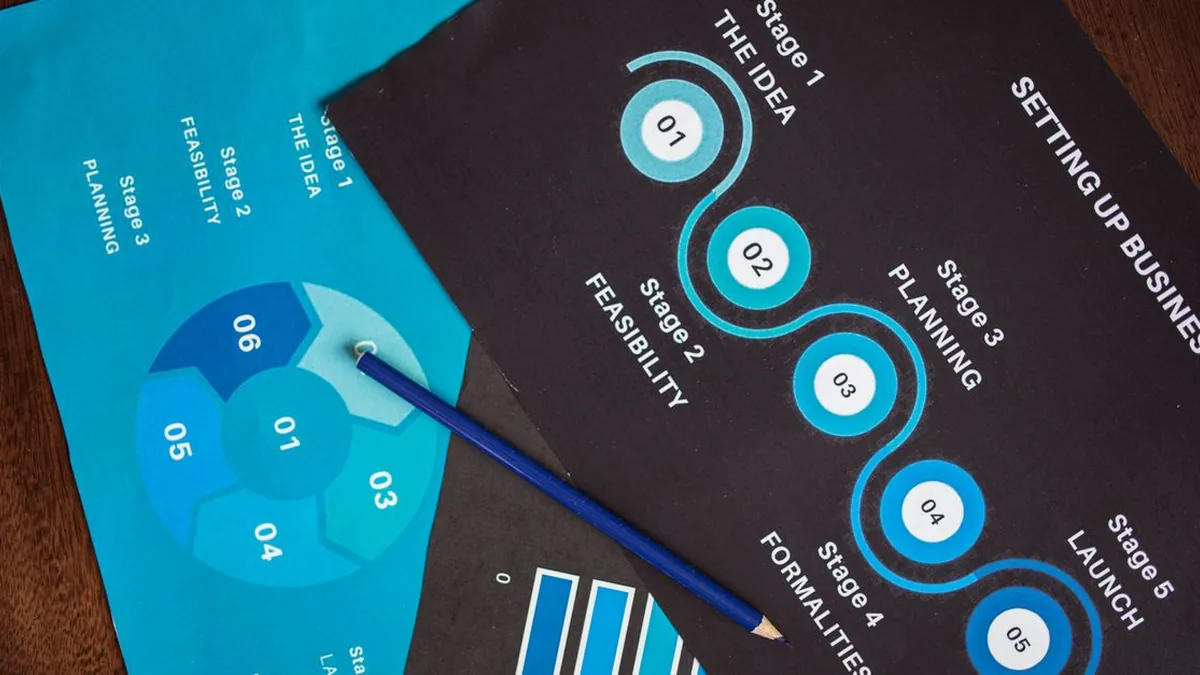
Photo by RDNE Stock project on Pexels
AI social media assistant for content planning with trend monitoring, approval gates, and feedback-led publishing.
A well-built assistant improves as the workflow grows because every stage produces structured context for the next stage. In 2025, the Content Marketing Institute found that productivity improved for 87% of AI-content users while content performance improved for 39%, which is why the architecture must connect faster execution to measurement instead of assuming the two are equal (Content Marketing Institute).
The flow begins with an idea, saved source, audience question, or trend signal. A retrieval step finds approved brand context and related examples. A model drafts platform-specific copy and a visual brief. Policy checks flag missing sources, restricted claims, duplicate wording, or unavailable assets. An approval queue collects edits and a final decision. A scheduler publishes through the platform’s supported interface. A measurement job collects results, and the learning step updates guidance for the next cycle.
The model layer can use the OpenAI API documentation or Anthropic documentation depending on the team’s requirements. Orchestration can be built in n8n, Make, or code with a stateful framework such as LangGraph. The important choice is not the logo. It is whether the system can persist state, enforce permissions, retry safely, and show why each action happened.
A searchable content store holds source records and approved examples. The approval queue holds the current draft version and reviewer decision. A publishing adapter handles account authentication and maps the approved content into the platform’s fields. The analytics job writes results back to the same post record so later recommendations can distinguish ideas, formats, and edits.
Failures should stop at the smallest safe boundary. If retrieval returns no trusted source, the assistant creates a research-needed task rather than inventing a claim. If the model call fails, the job retries without creating another approval item. If approval expires, the post remains unpublished. If the publishing API returns an uncertain response, the system checks the platform before retrying so it does not create a duplicate.
Use idempotency—a rule that makes repeated requests produce the same outcome—to prevent double publishing. Encrypt account credentials, rotate tokens, log permission changes, and separate draft creation from publish authority. A useful assistant is not defined by never failing. It is defined by failing visibly, preserving the approved version, and recovering without guessing.
The right setup depends on whether the team needs occasional copy help, coordinated scheduling, or a connected learning workflow. In 2025, the Content Marketing Institute found that 95% of surveyed B2B marketers used AI-powered applications while 38% were using or implementing social scheduling, analysis, or automated-posting tools, showing that many teams still have disconnected pieces rather than a complete system (Content Marketing Institute).
| Setup | Best fit | What it handles well | Main limitation |
|---|---|---|---|
| Simple caption assistant | An individual or small team that already has a publishing process | Rewrites, hooks, variations, tone changes, and quick draft generation | Brand context, approvals, trend evidence, and learning usually remain manual |
| Social scheduling suite | A team managing several accounts and a shared calendar | Drafting, scheduling, channel previews, calendars, and basic analytics | Memory and feedback may stay inside separate notes, reports, or reviewer conversations |
| Custom connected system | A team with repeatable content operations, approvals, integrations, and measurable outcomes | Source capture, retrieval, platform adaptation, approval states, publishing, analytics capture, and feedback-led planning | Requires scoping, integration work, governance, testing, and ongoing ownership |
Choose a caption assistant when the bottleneck is the blank page and a person already owns research, fact-checking, approval, publishing, and analysis. Buffer’s assistant is a practical example for generating and reworking copy inside a familiar publishing tool.
Choose a scheduling suite when coordination is the larger problem. A shared calendar, channel previews, permissions, and publish status reduce missed handoffs. Tools in this category may include AI writing features, but the team still needs to check whether brand memory, trend inputs, approval evidence, and analytics history remain connected.
Choose a custom system when content begins in several places and must pass through repeatable controls before publishing. The Flick AI social media assistant and similar products can support ideation, captions, and planning, but a custom workflow is better suited when the team must connect private knowledge, custom approval rules, CRM outcomes, and platform-specific failure handling. Ownership should be disclosed clearly when a provider compares its own service with packaged tools; the fair distinction is setup depth, not a claim that one category is always superior.
The assistant is helping only when it improves speed, control, content quality, or business outcomes against a manual baseline. As reviewed in 2026, X limits access to certain post metrics to the previous 30 days, so a dependable scorecard needs scheduled collection rather than occasional reporting (X Developer Platform).
Before automation, record the current process from idea creation through approved publication and later analysis. Use the same definitions after launch. Otherwise, a faster draft can look like success even when approvals take longer, rejection rises, or published content performs worse.
Measure cycle time from idea capture to approval and from approval to publication. Track reviewer effort by the amount of copy changed, the number of review rounds, and the share of drafts that require a full rewrite. Calculate cost per approved post from model usage, software cost, and human review effort rather than generation cost alone.
Also track queue health: drafts waiting for review, scheduled posts missing assets, failed publishing jobs, and duplicates prevented. These measures reveal whether the assistant removed work or merely moved it into another part of the process.
Track approval rate, rejection reason, source completeness, policy flags, and brand edits. Separate factual corrections from style changes because they indicate different problems. A factual correction suggests weak grounding or verification; a style correction suggests missing examples or unclear brand rules.
Publishing reliability deserves its own measure. Record successful publication, retry, uncertain response, duplicate prevention, and manual recovery. A system that writes strong copy but cannot prove what reached the platform is not ready for broader autonomy.
Compare posts by purpose, audience, platform, format, and topic rather than using one global average. Measure qualified engagement such as useful replies, saves, profile visits, or visits to a relevant page, then connect content to leads or conversions only where attribution is defensible.
The final scorecard should answer three questions: Did the team spend less effort producing approved work? Did the system publish reliably under the agreed controls? Did the content create the intended audience or business response? Improvement in only one area may still be valuable, but it should not be mislabeled as complete success.
An AI assistant is not the right answer when the work requires direct human accountability, sensitive judgment, or data the system should not access. In 2025, an experimental preprint involving 680 U.S. participants found that some generative-AI assistance increased posting and engagement while reducing perceived quality or authenticity, which supports mandatory human ownership for brand-sensitive communication (“The Impact of Generative AI on Social Media: An Experimental Study”).
Crisis responses, legal claims, financial or medical statements, layoffs, safety incidents, public apologies, and sensitive customer matters should remain human-led. The assistant may collect approved facts or prepare a private brief, but it should not decide the position, emotional tone, or release timing.
Accounts with unclear brand positioning also need human work first. Memory cannot compensate for contradictory guidance. If reviewers disagree about the audience, value proposition, or claims the company is willing to make, automating drafts will reproduce that disagreement at higher volume.
Do not place private messages, customer records, unreleased product details, or licensed creative assets into a model or searchable store without permission, access controls, and retention rules. Platform permissions also matter: an assistant should publish only through supported account types and authorized interfaces, with credentials scoped to the minimum required actions.
Authenticity requires more than disclosure labels. A post can be technically compliant and still feel generic, misleading, or detached from the team’s experience. Pause automation when the source is weak, the claim cannot be verified, the subject involves a real person, or the platform response is uncertain. Human ownership is the correct design choice when the cost of a wrong post is higher than the value of faster output.
The seven benefits add up to a controlled content system that produces faster work, preserves judgment, and learns from real results. In 2025, the Content Marketing Institute found an 87% productivity improvement rate among AI-content users but a 39% content-performance improvement rate, reinforcing that output volume and business value must be measured separately (Content Marketing Institute).
The best starting point is one audience, one approval path, and a small set of outcomes the team can measure consistently. In 2025, Adobe found that 58% of surveyed marketers spent more than 40% of their time on reviews and approvals, so fixing the handoff around drafting and approval can be more valuable than adding more content volume (Adobe).
Begin with a single source type and one publishing destination, keep every post human-approved, and compare the result with the current manual process. When that loop is reliable, generate social media posts through a connected workflow that adds trend tracking, approvals, X publishing, and feedback-led planning without giving up control.
Zegham Ali is an AI Agent and LLM Engineer at CogWork Labs. He designs AI agents with scoped permissions, bounded memory, evals, and monitoring — so agents stay observable and safe in production, not just impressive in a demo.
Compare 7 free social media posting and scheduling tools by account limits, supported networks, automation, content creation, and real upgrade costs today.
Awais AhmadMar 30, 2026
See the benefits of email automation for customer nurturing, from better segmentation and timely follow-up to clearer funnel tracking and stronger sales.
Awais AhmadMay 2, 2026
Build an n8n AI assistant self hosted on a Mac mini with private access, durable memory, approvals, and failure alerts for reliable daily business use.
Zegham AliApr 22, 2026